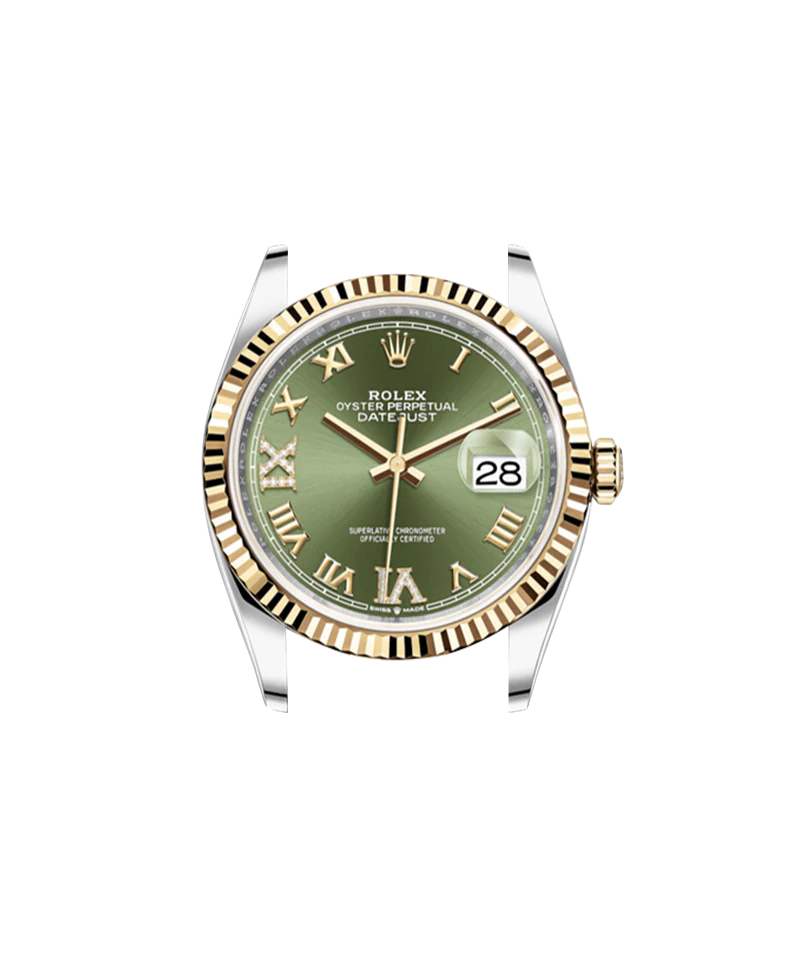
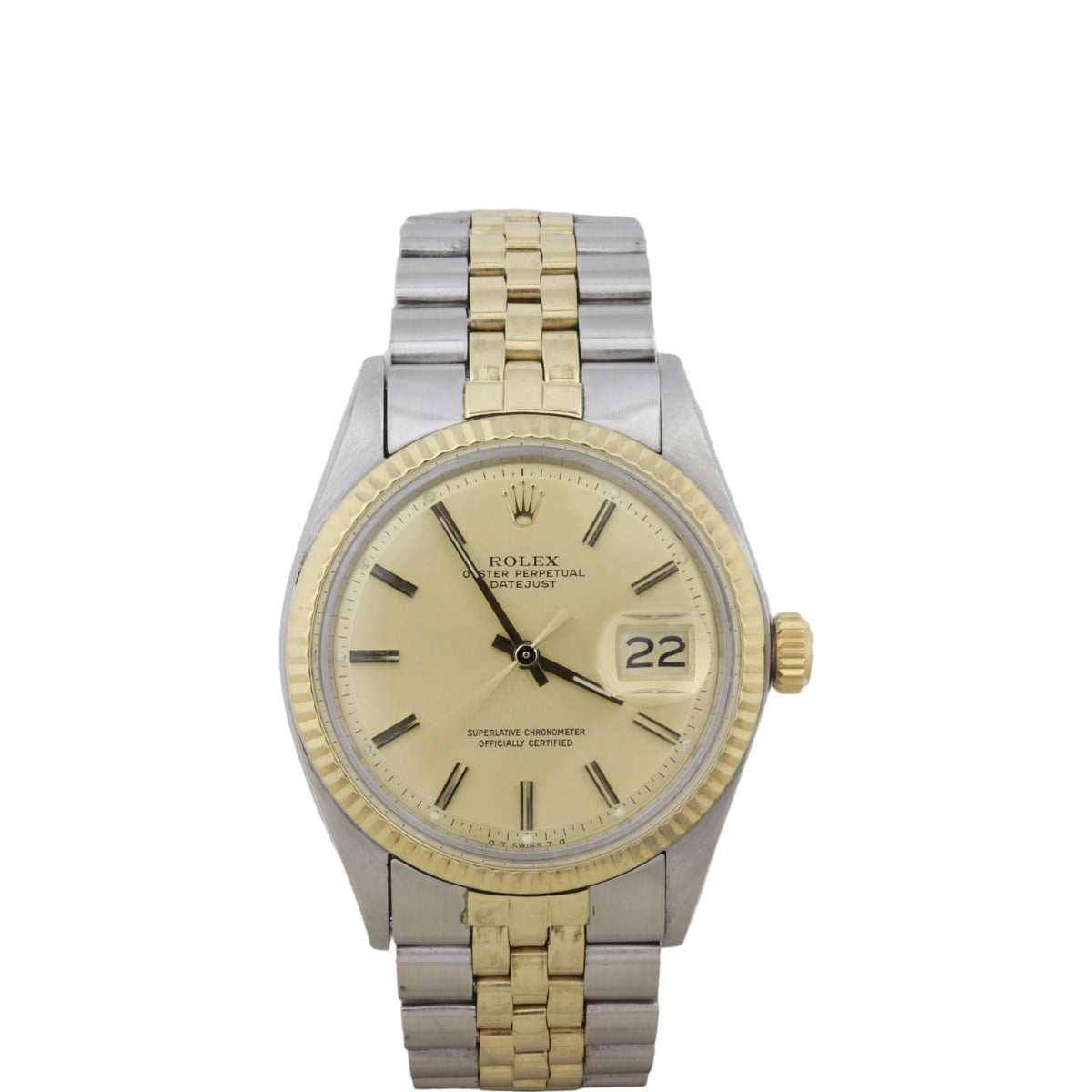
The Rolex Datejust comes in three main metal options: Oystersteel, two-tone Rolesor (steel combined with 18ct gold) and full 18ct gold. Steel is the most understated and affordable, two-tone gives the classic steel-and-gold Datejust look at a mid-range price, and full gold is the most luxurious, heaviest and most expensive. This guide compares how each looks, wears and ages so you can choose with confidence.
The three Datejust metals at a glance
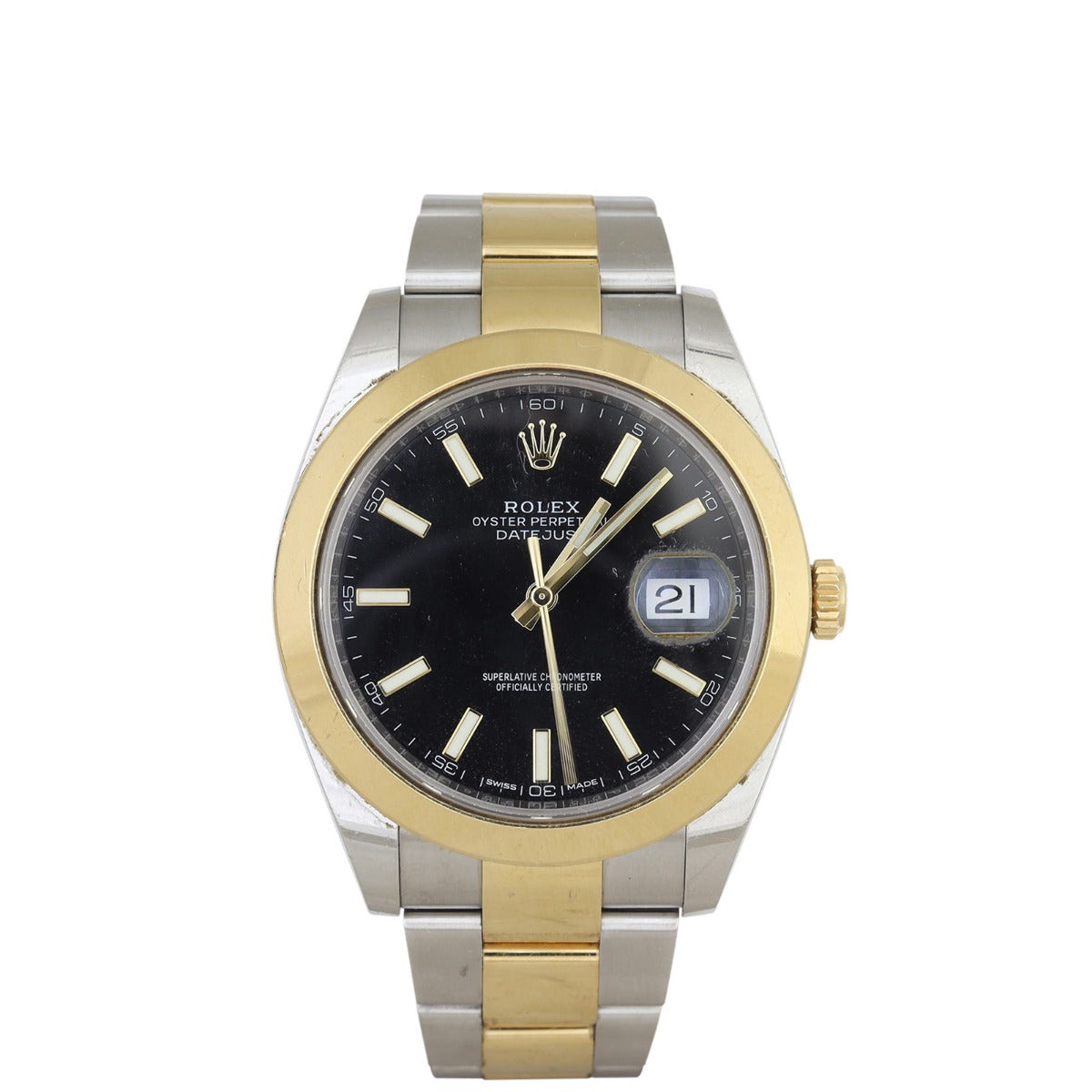
| Oystersteel | Two-tone Rolesor | 18ct gold | |
|---|---|---|---|
| Look | Understated, sporty | Classic, warm accents | Rich, statement |
| Weight | Lightest | Medium | Heaviest |
| Scratches | Hard-wearing | Gold parts show marks sooner | Softer metal, shows marks |
| Price | Lowest | Mid-range | Highest |
| Shop | Datejust 36 | Two-tone | Gold |
Oystersteel: the understated everyday choice
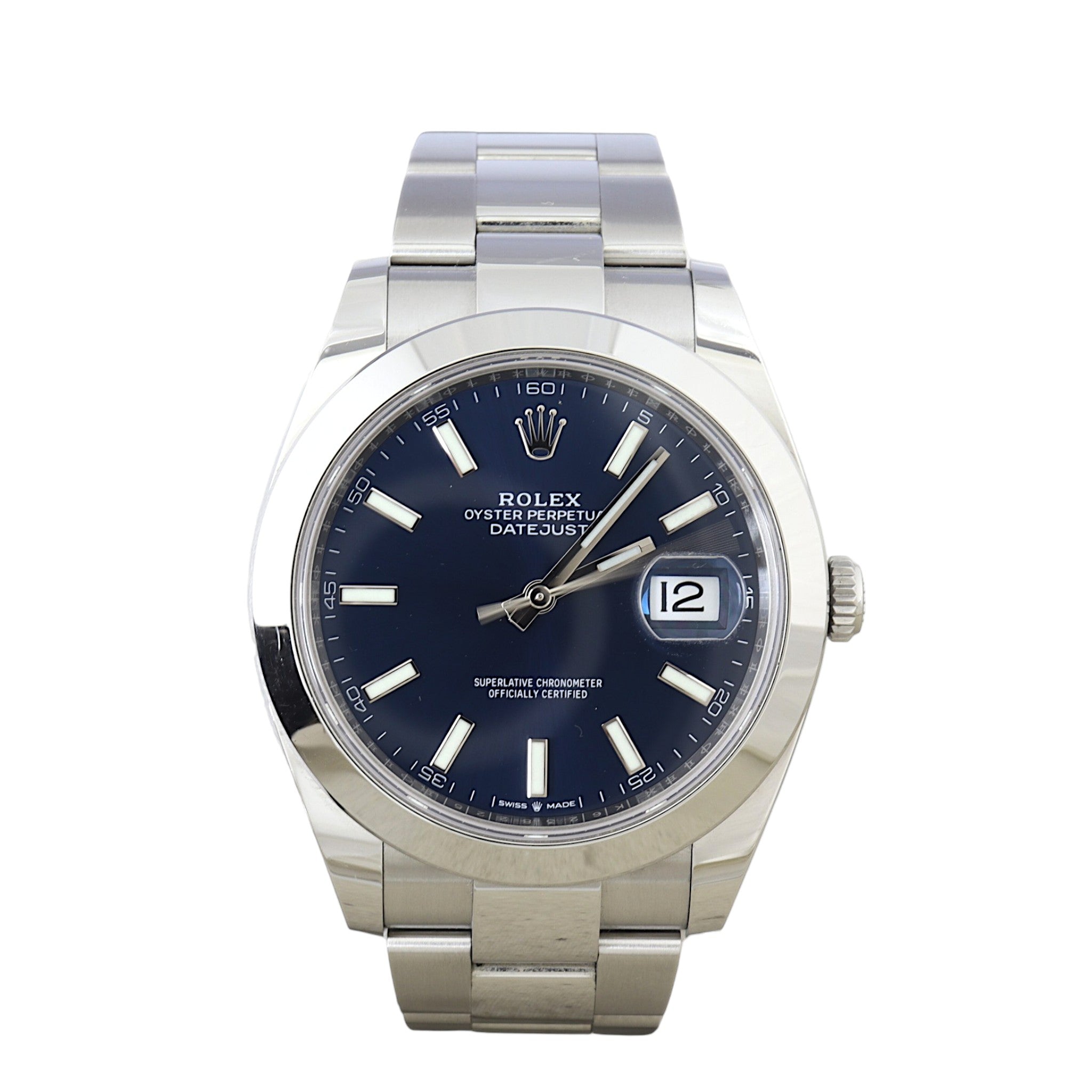
Rolex uses its own highly corrosion-resistant steel alloy, which it calls Oystersteel. A steel Datejust with a smooth bezel, such as the Datejust 41 126300, is the most low-key way to wear a Rolex and suits office, casual and sport settings alike. Steel is the most forgiving metal for daily wear, and steel Datejusts are generally the most affordable entry point into the model, especially in 36mm.
White Rolesor: steel with a white gold bezel
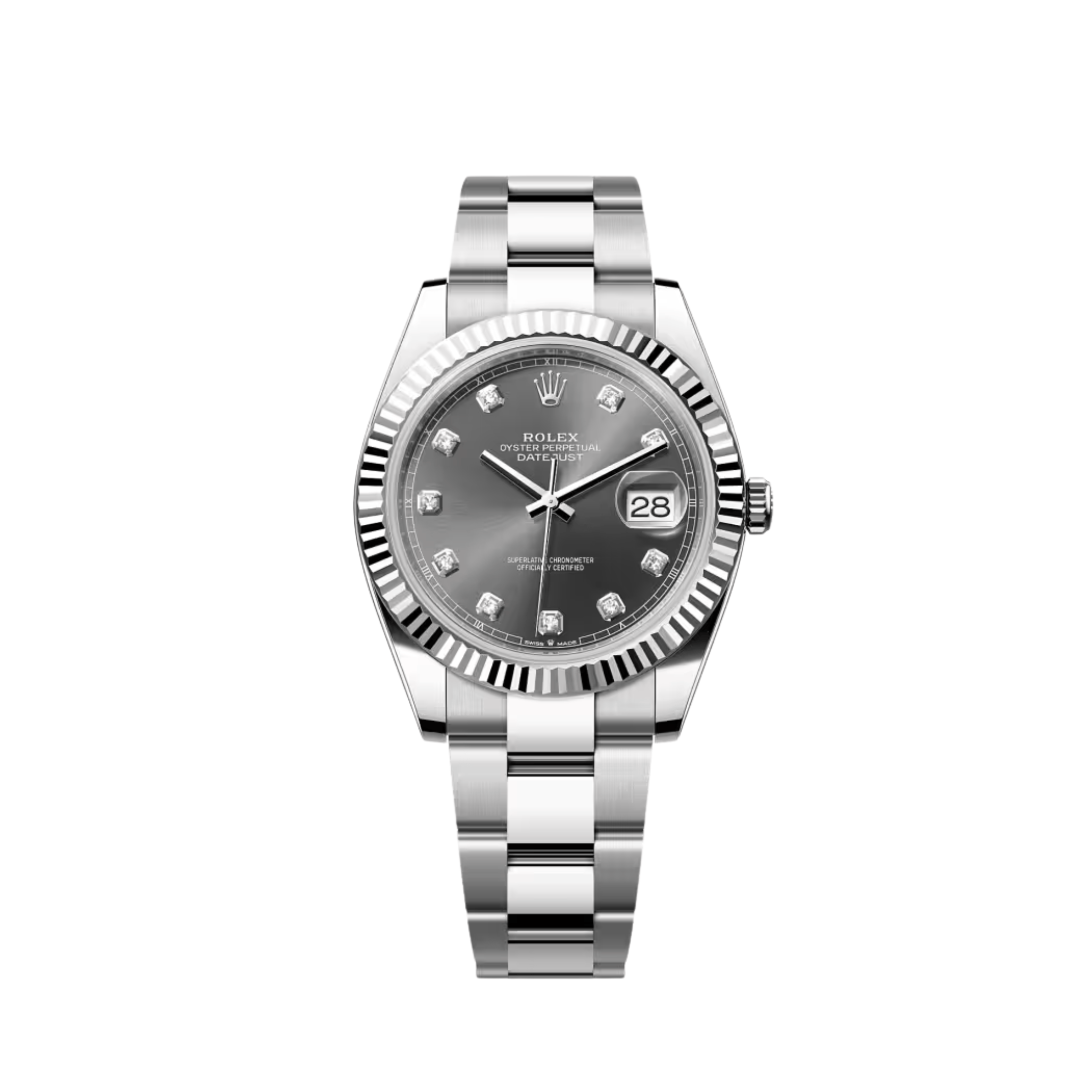
Many “steel” Datejusts actually pair an Oystersteel case and bracelet with an 18ct white gold fluted bezel. Rolex calls this White Rolesor. It looks like steel at a glance, but the white gold bezel has a brighter shine. References ending in 4, such as the 126334 or the vintage 16234, use this combination. It is the most popular way to get the classic fluted bezel without visible yellow gold.
Two-tone Rolesor: the classic Datejust look
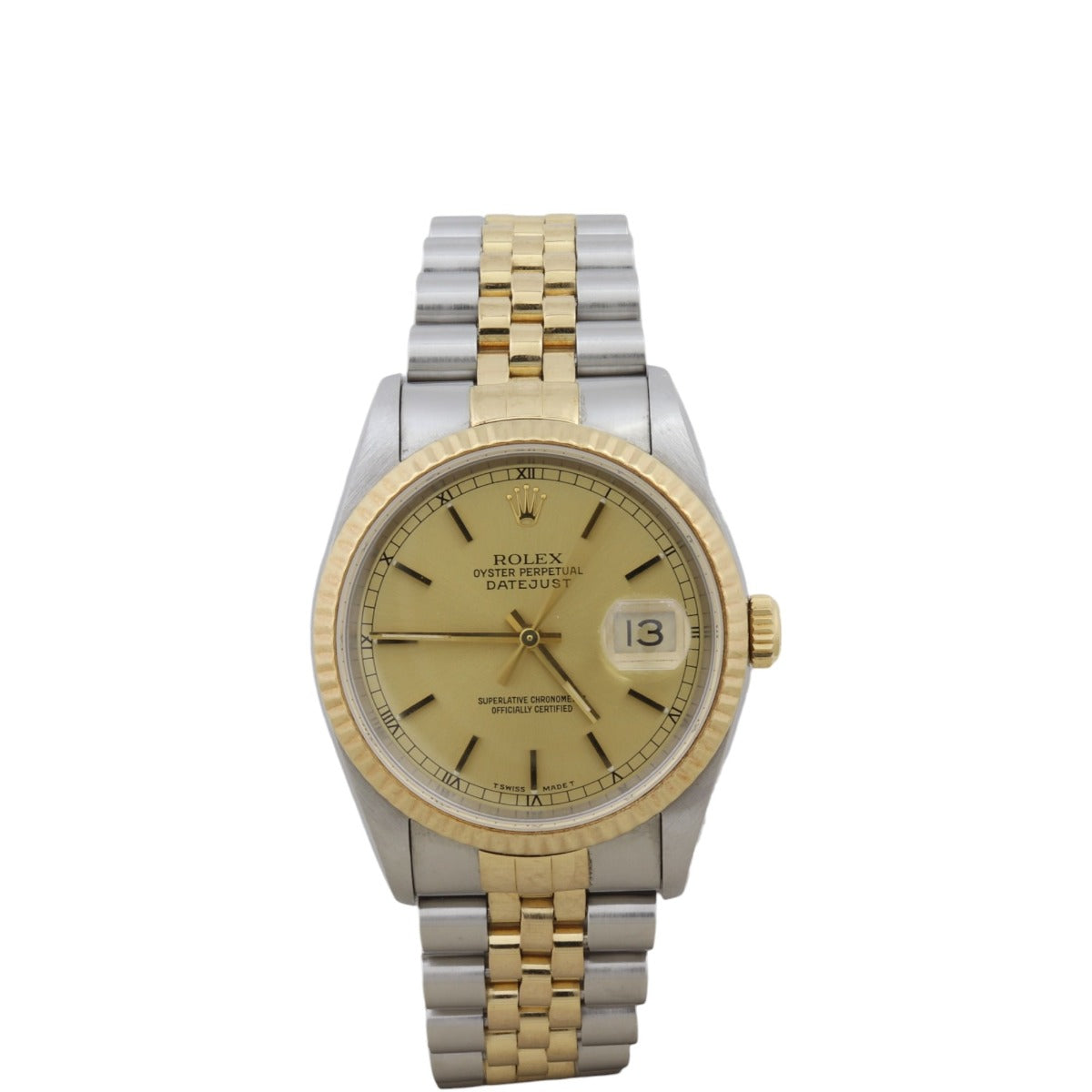
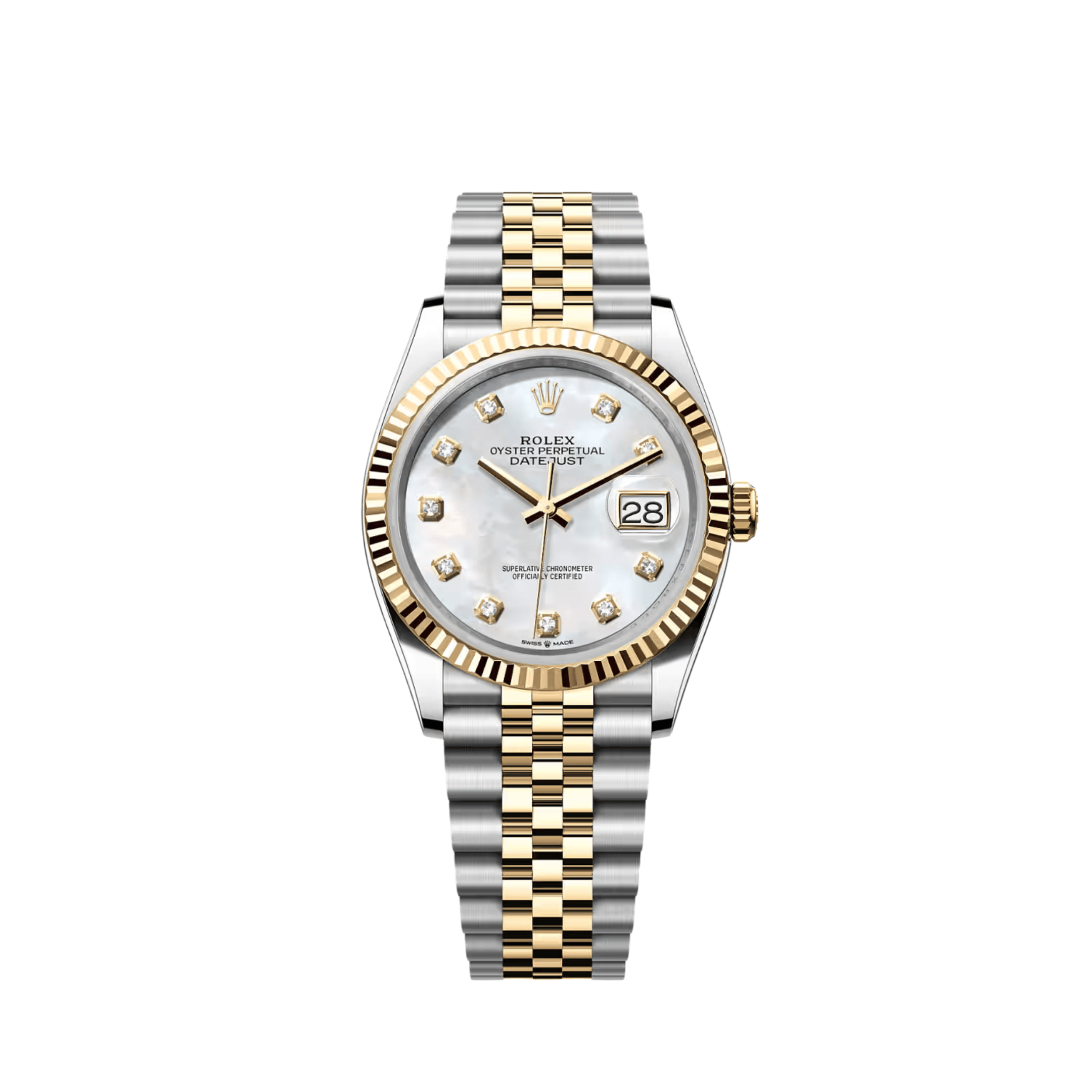
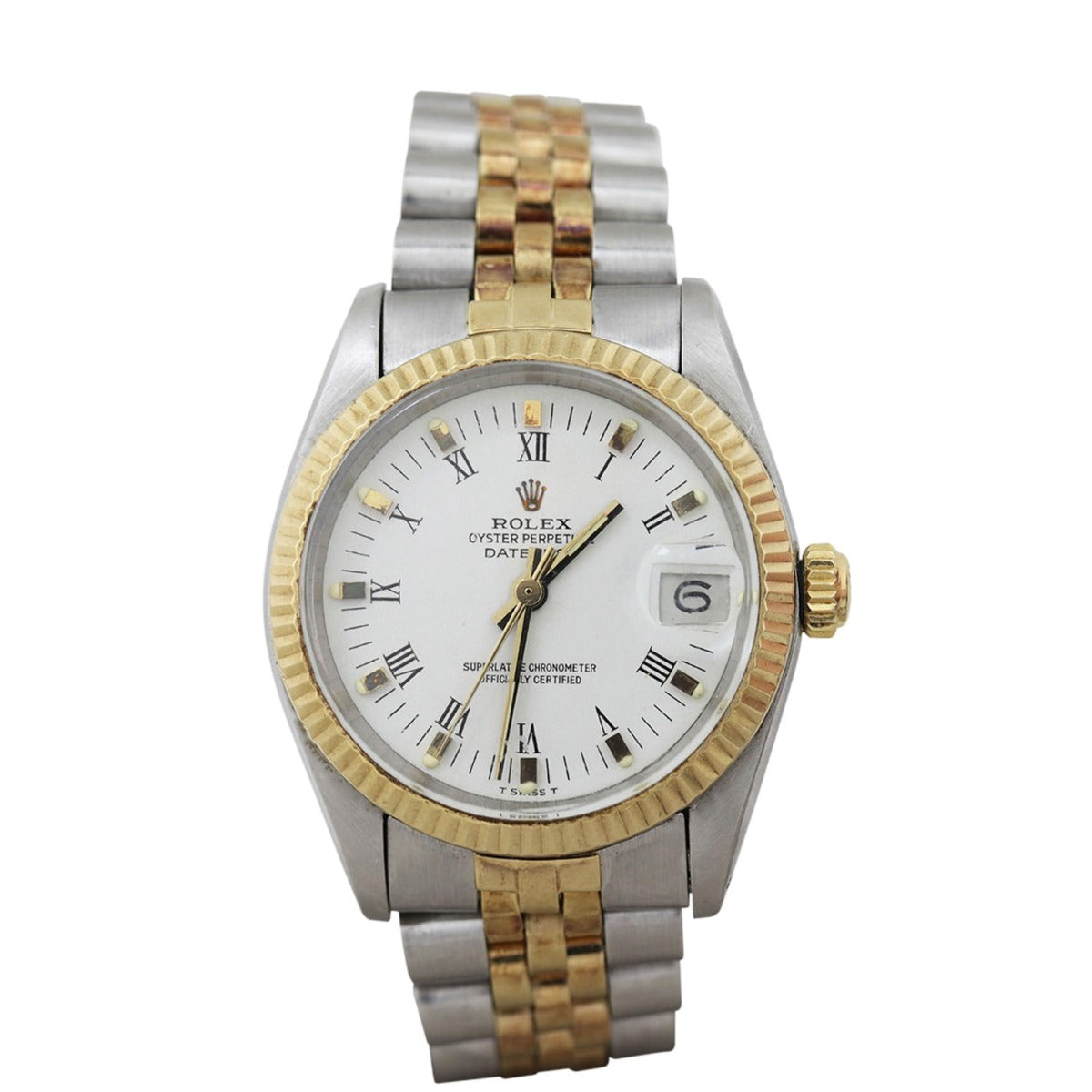
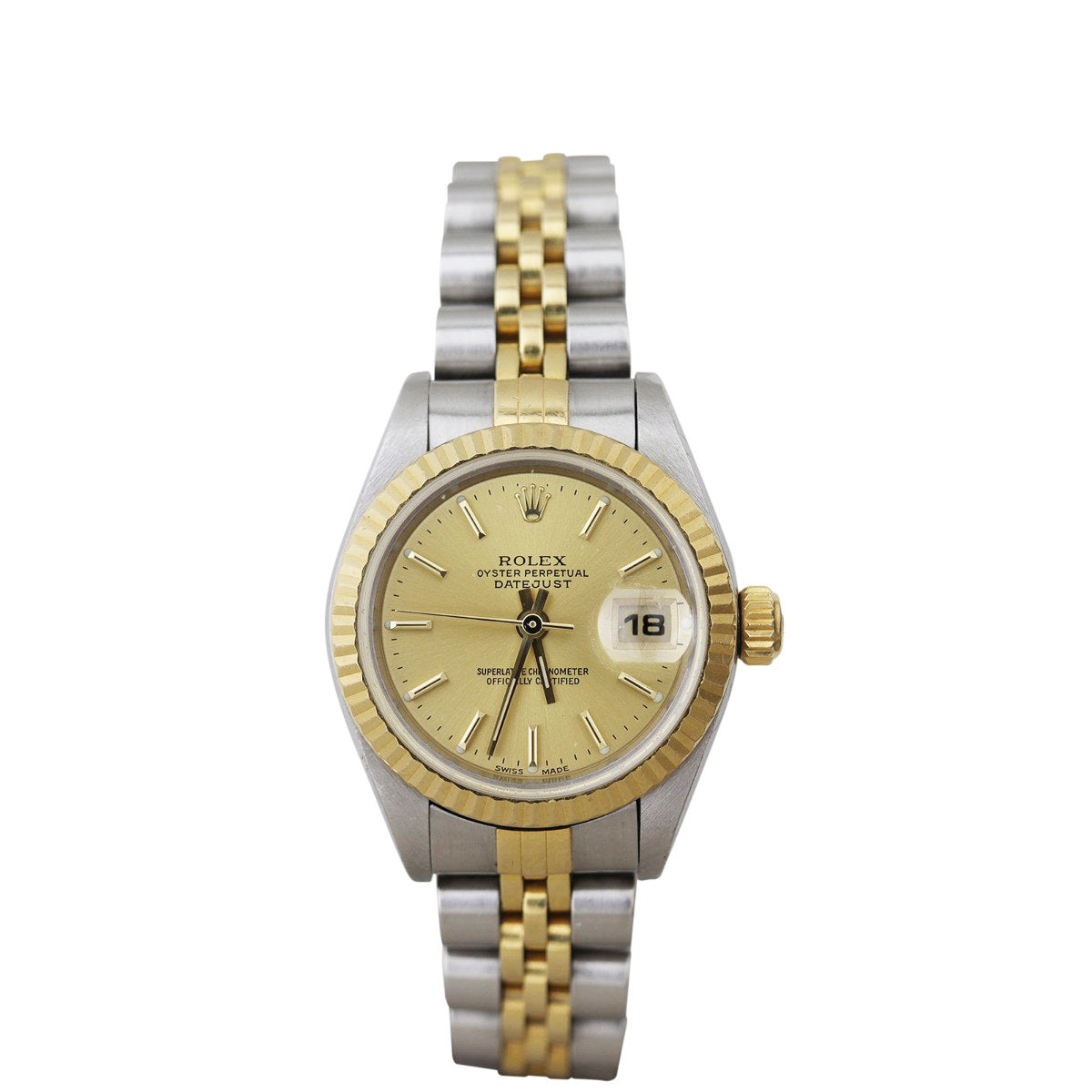
Rolex registered the Rolesor name in 1933 for its combination of steel and gold. Yellow Rolesor pairs an Oystersteel case with an 18ct yellow gold bezel, crown and centre bracelet links, and is the look most people picture when they think of a Datejust. References ending in 3, such as the 16233 or the 126233, are Yellow Rolesor. Everose Rolesor uses Rolex’s own 18ct rose gold alloy instead, for a warmer, more contemporary feel; those references end in 1, such as the 179171.
Two-tone is the sweet spot for many buyers: it gives the warmth of gold at a fraction of the price of a full gold watch. Browse all two-tone Datejusts.
Full 18ct gold: the luxury option

A full gold Datejust has its case, bezel and bracelet all in 18ct gold, which Rolex casts in-house in yellow, white and Everose. Full gold Datejusts are most common in the Lady-Datejust sizes and are often paired with diamond dials or bezels. They feel noticeably heavier and are softer than steel, so they show marks more readily, but many owners see that patina as part of the appeal. See our gold Datejust collection and diamond Datejusts.
Matching dial colours to each metal
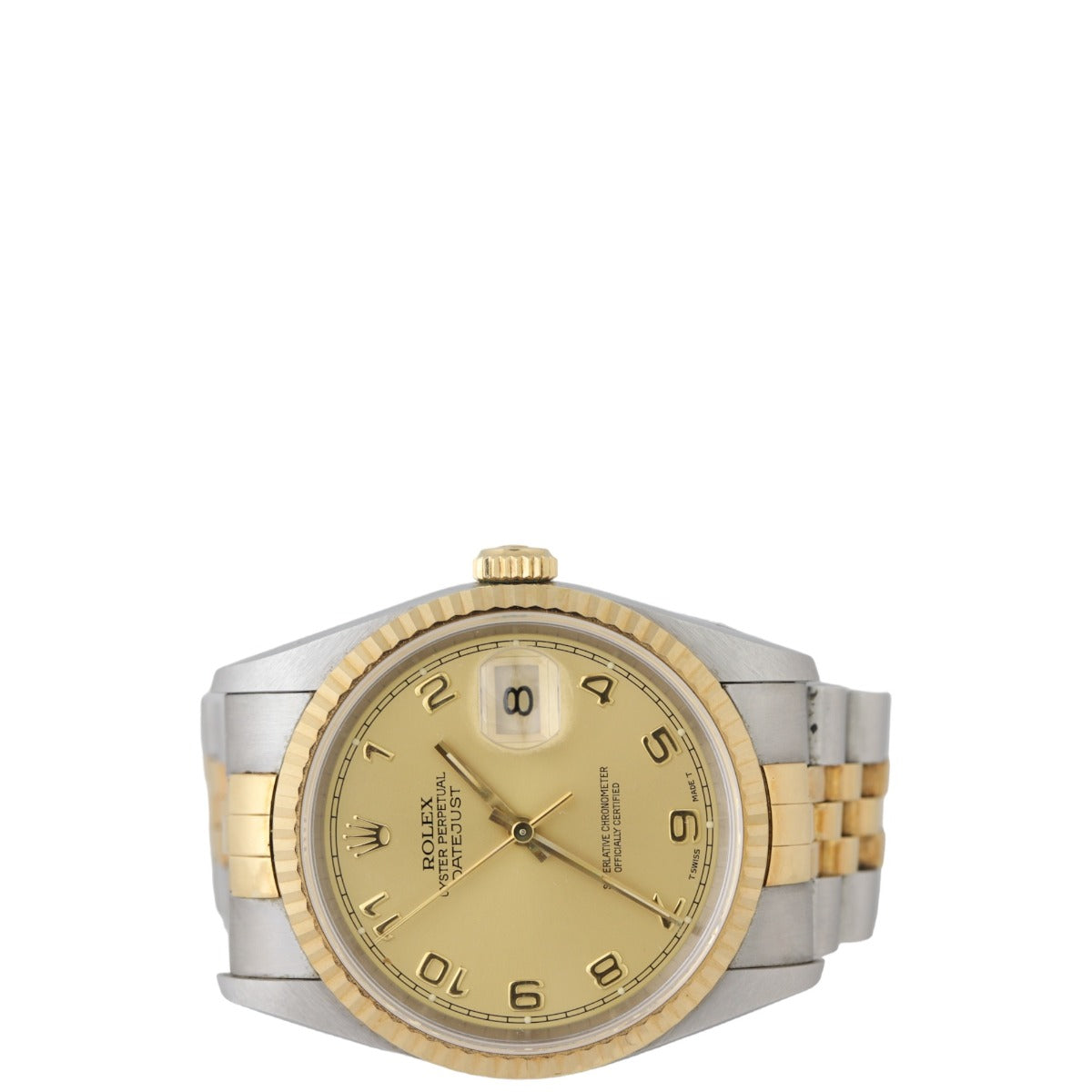
The metal you choose changes which dials look best. Steel and White Rolesor pair well with almost anything, from crisp white and silver to blue, slate, black and green; the green ombré 126334 is a good example of a modern colour on steel. Yellow Rolesor is traditionally matched with champagne, gold, white or black dials, while Everose Rolesor suits chocolate, silver and pink. Full gold watches often carry champagne dials or diamond hour markers for maximum warmth. If you are buying your first Datejust, a neutral dial on your chosen metal is the easiest to wear with everything.
How each metal wears and ages
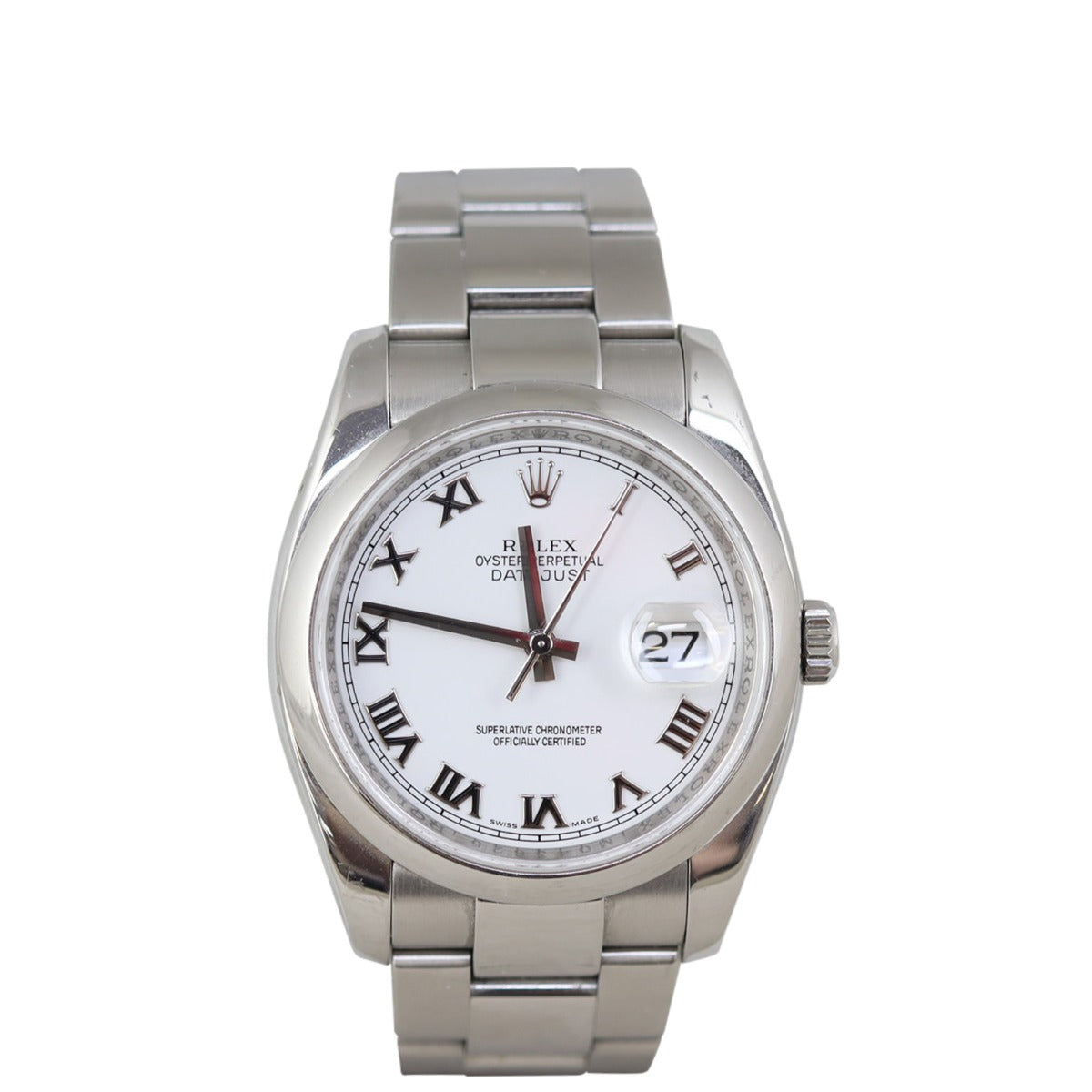
All metals pick up fine scratches with daily wear. Steel hides them best and can be refinished during a service. Gold is softer, so polished gold surfaces and bracelet links show wear sooner, and two-tone bracelets can show slight colour contrast where gold links have been polished differently over the years. When buying pre-owned, read the condition notes on each listing and look closely at bracelet stretch and polishing, as covered in our pre-owned buying checklist.
Which metal holds value best?
No metal guarantees future value. Pre-owned prices depend on reference, condition, dial, completeness of box and papers, and wider market demand. In general, steel and White Rolesor models are the most widely traded, two-tone models offer gold at a lower entry price, and full gold watches carry the metal’s own intrinsic value. Compare current figures in our Datejust price guide before deciding.
Frequently asked questions
What is Rolesor?
Rolesor is Rolex’s name for the combination of Oystersteel with 18ct gold on the same watch. Yellow Rolesor uses yellow gold, Everose Rolesor uses rose gold and White Rolesor uses a white gold bezel.
Is a two-tone Rolex Datejust a good investment?
A two-tone Datejust is a popular, widely recognised watch, but no watch is guaranteed to rise in value. Buy one because you will enjoy wearing it, and pay a fair price for its condition.
Is a gold Datejust too heavy for everyday wear?
A full gold Datejust is heavier than steel, but many owners wear one daily. If you are unsure, two-tone gives you gold accents with a lighter feel.
Shop by metal
Browse two-tone Datejusts, 18ct gold Datejusts and diamond Datejusts, then pick your size with our Datejust size guide. For an overview of the whole range, see our complete Rolex Datejust guide.
Comparing prices before you buy is always worthwhile. Alongside our own stock, you can browse the Bob’s Watches pre-owned Rolex catalogue to see how similar Rolex watches are priced across the Australian market.
Swiss Rolex Datejust is an independent pre-owned watch dealer and is not affiliated with or endorsed by Rolex SA. Rolex, Datejust, Day-Date, Oyster Perpetual and Rolesor are trademarks of Rolex SA.
