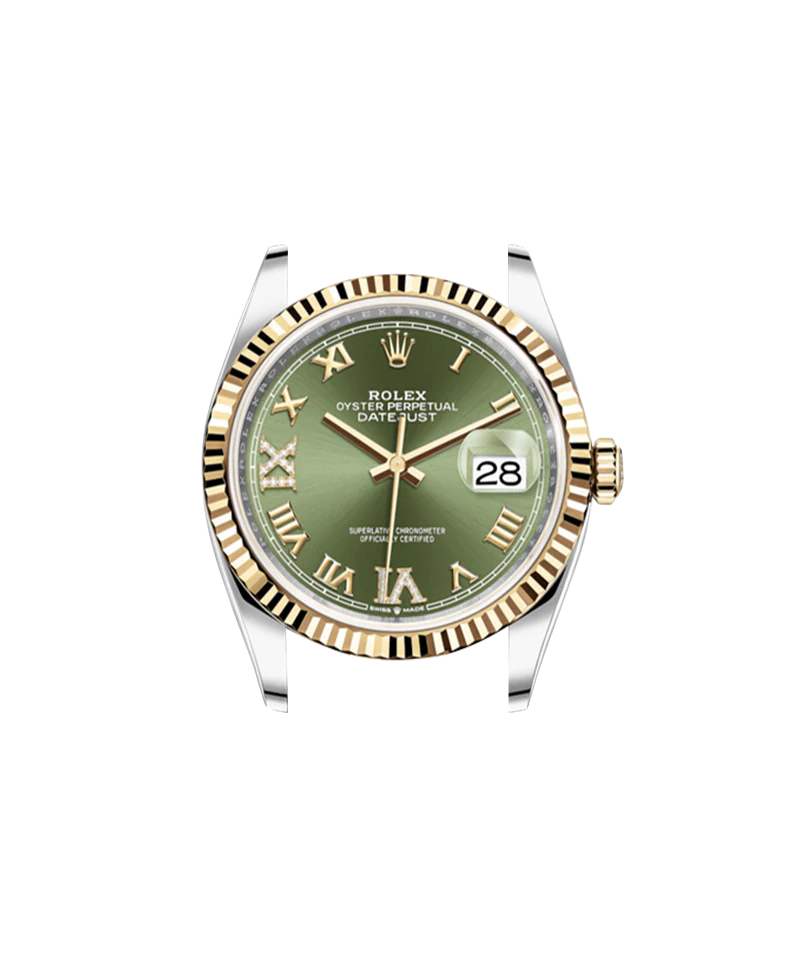
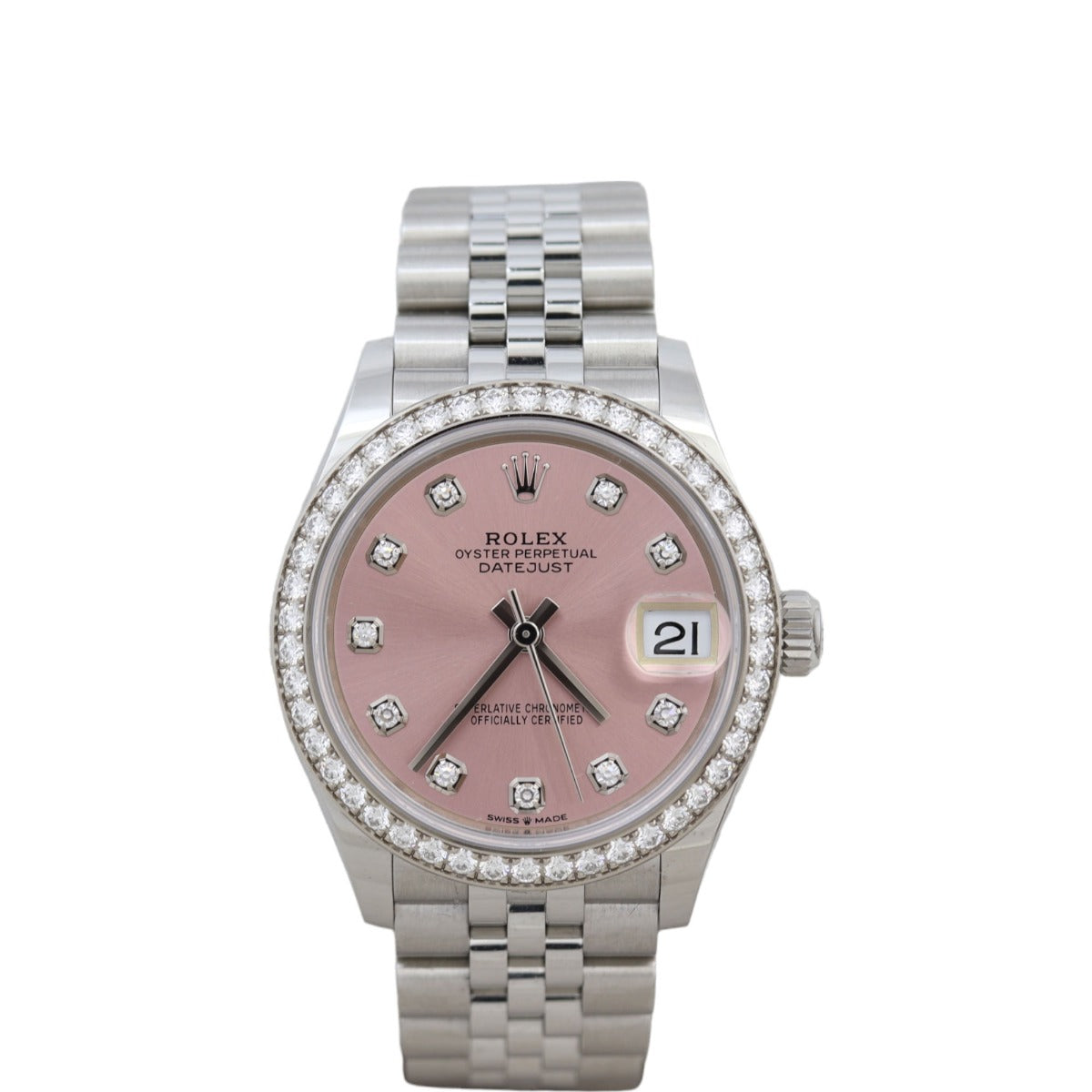
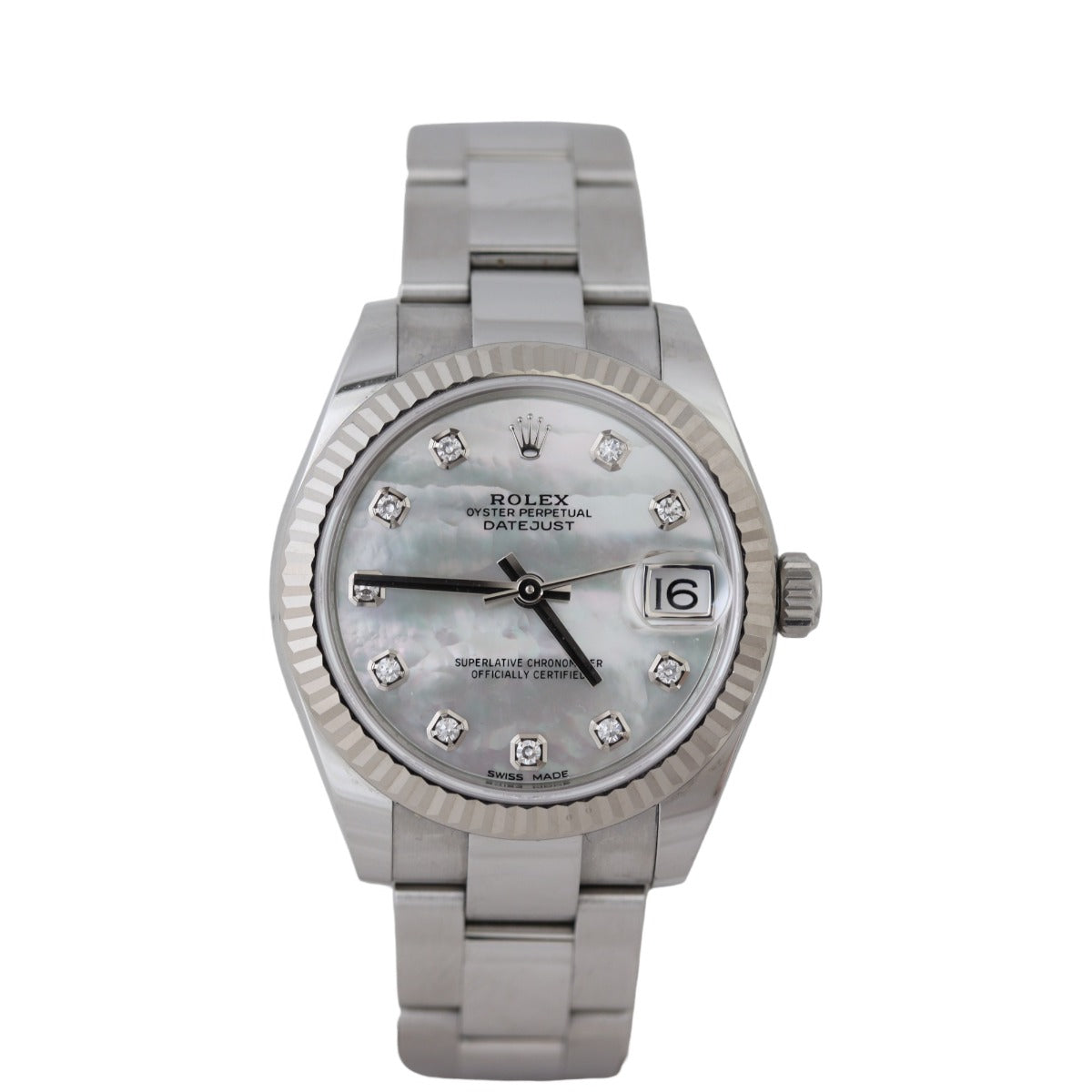
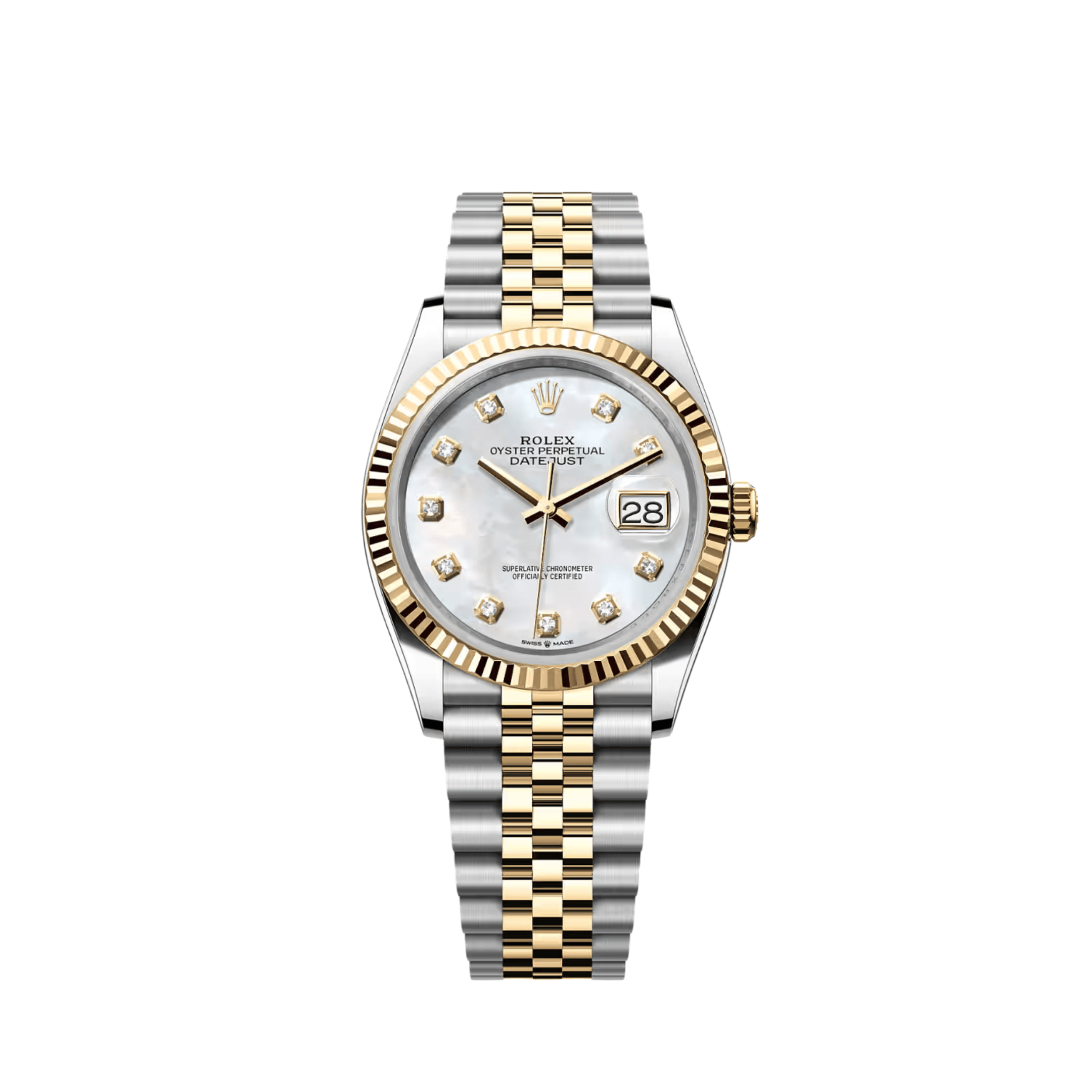
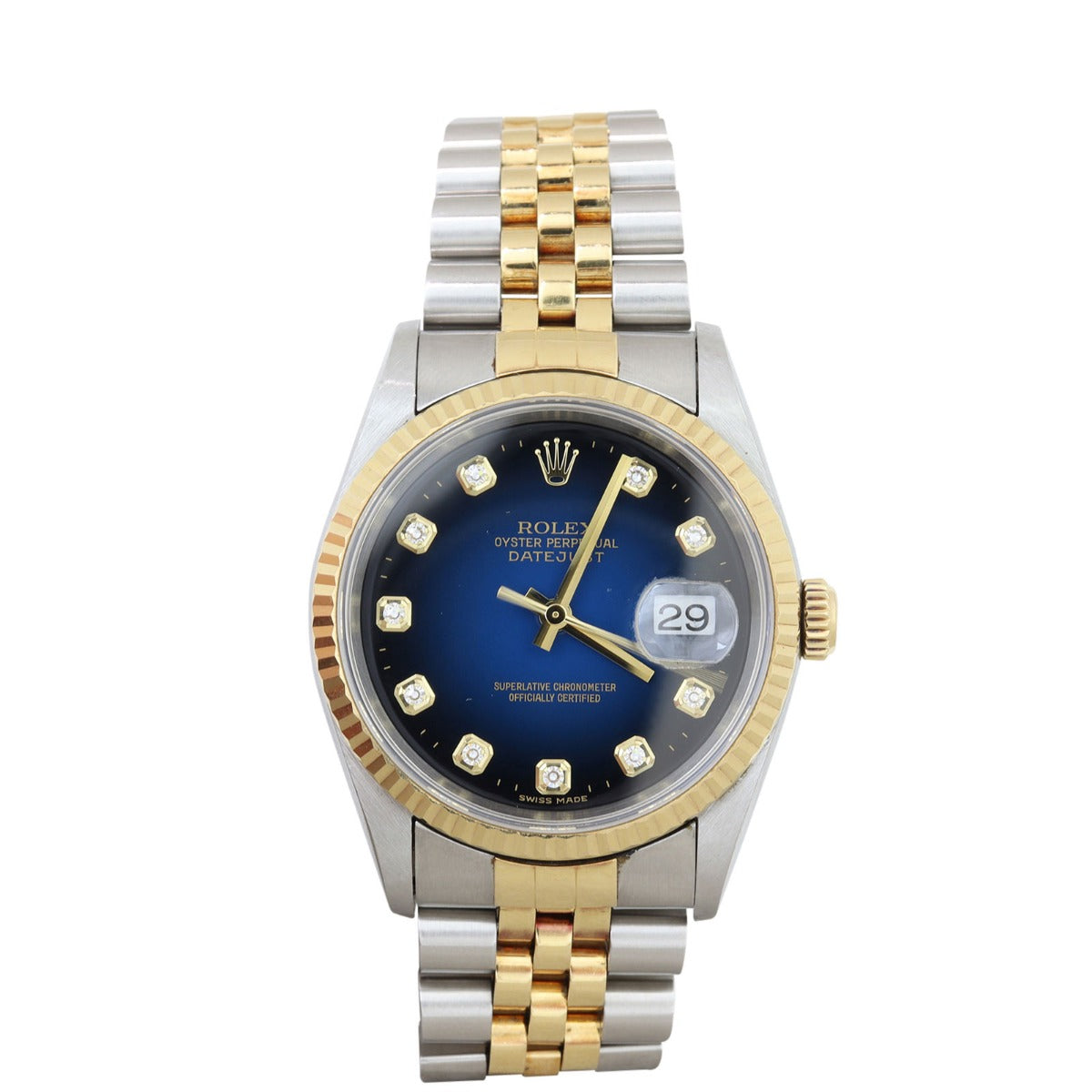
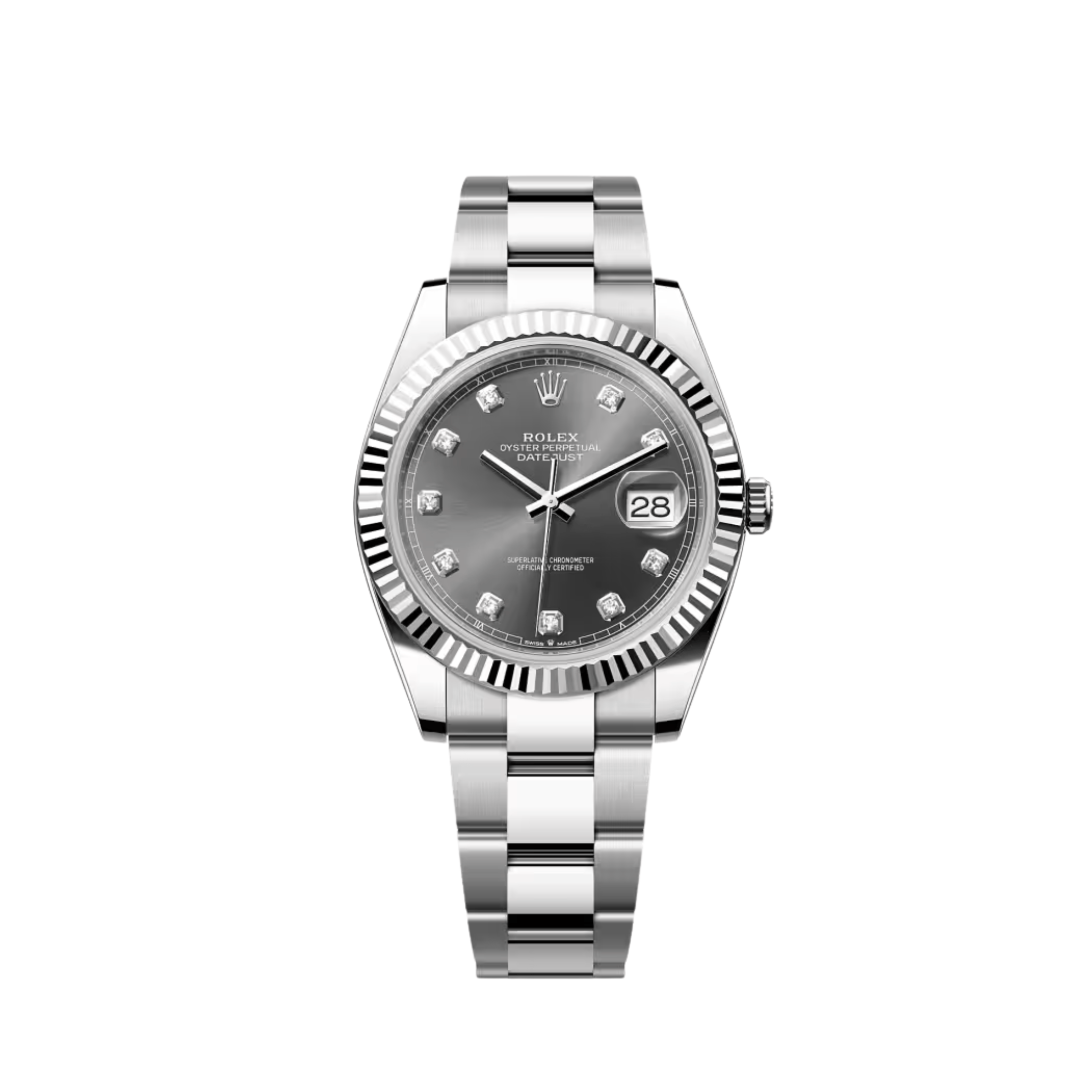
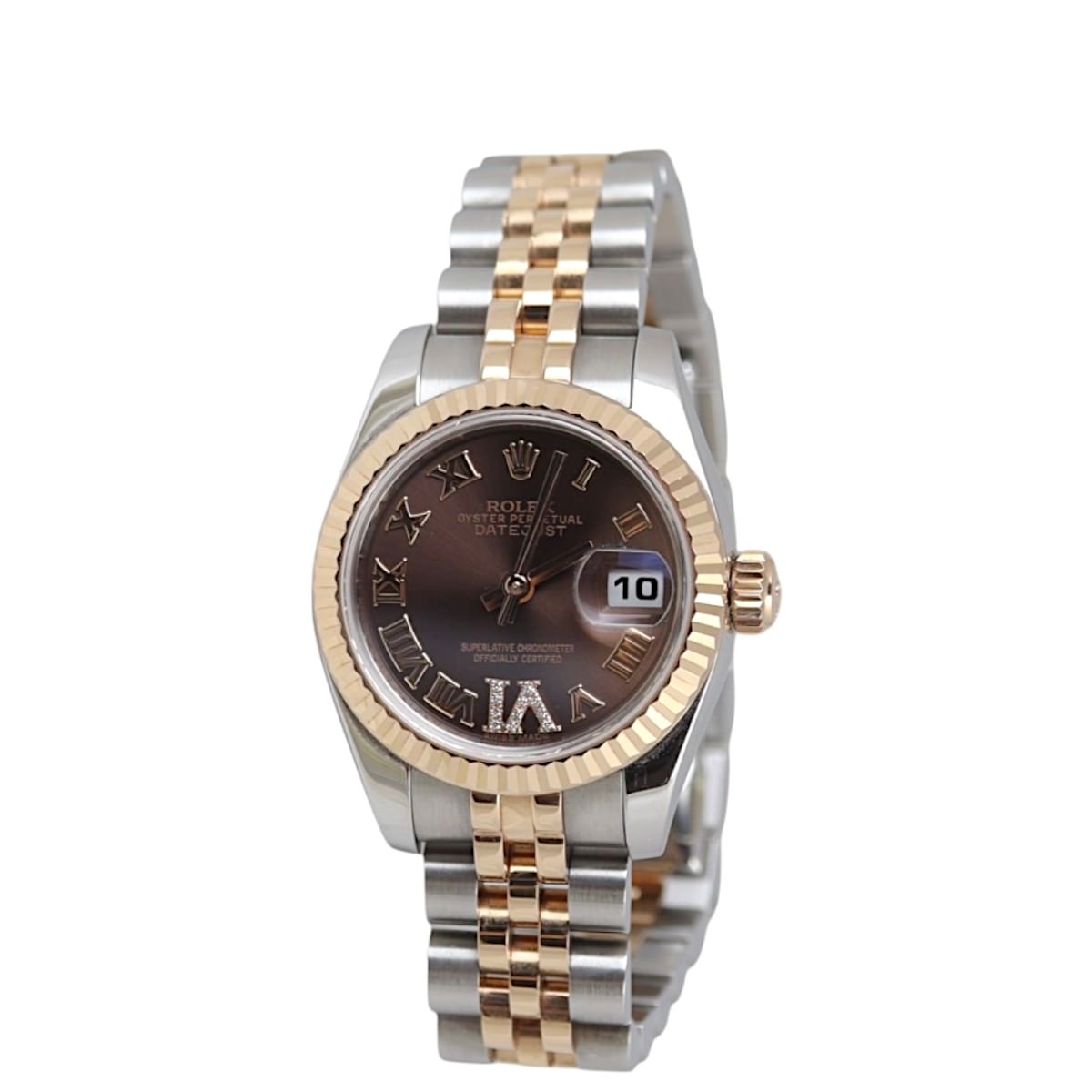
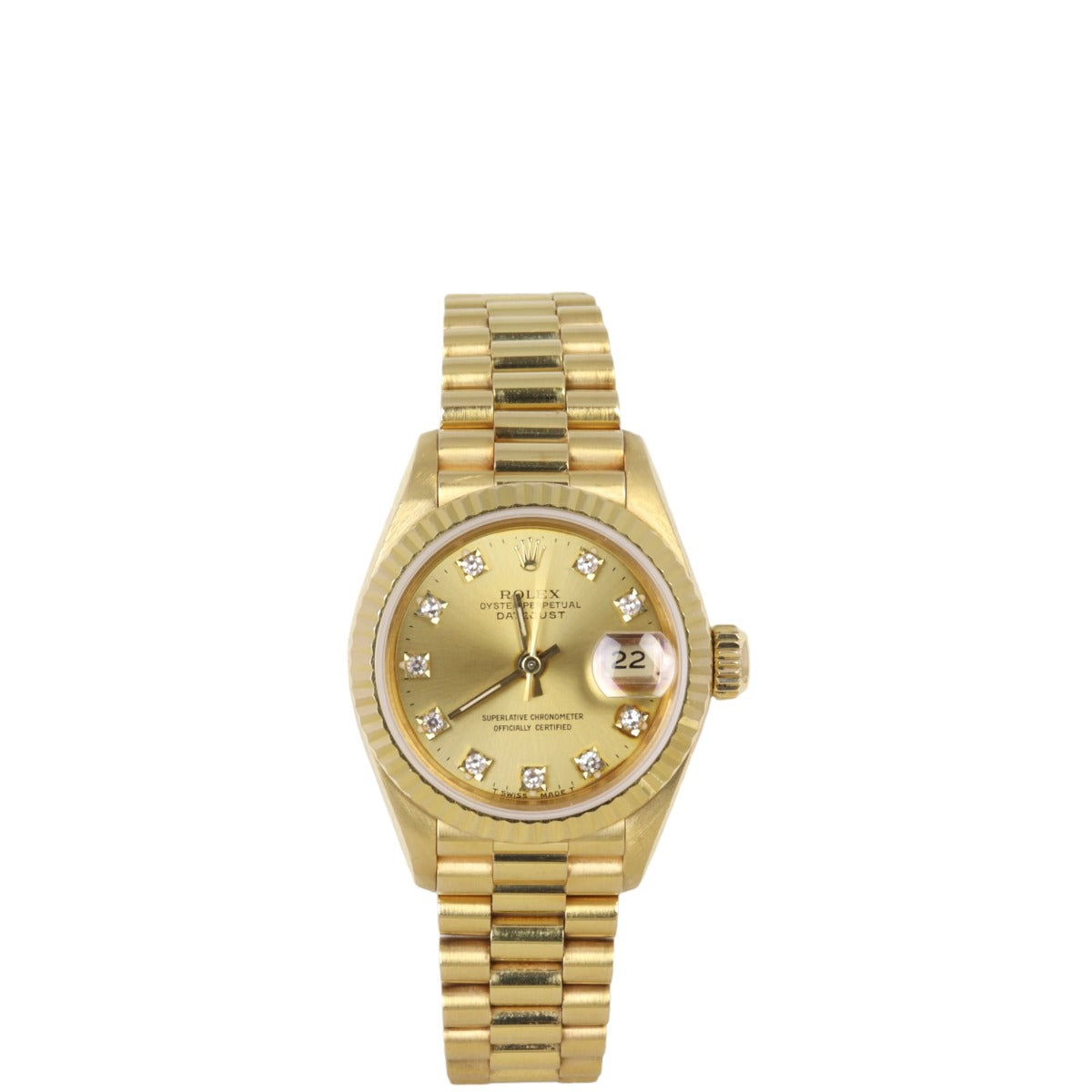
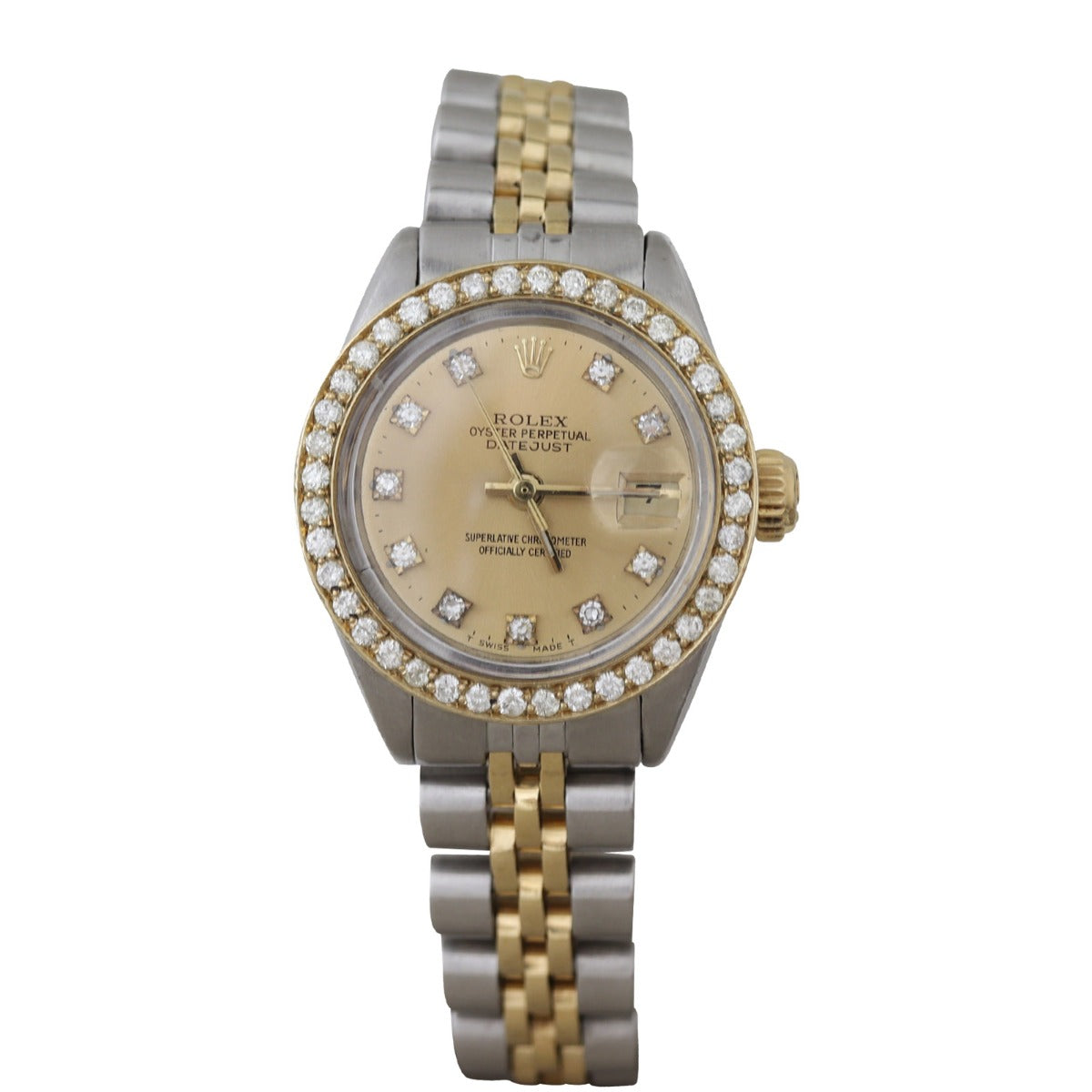
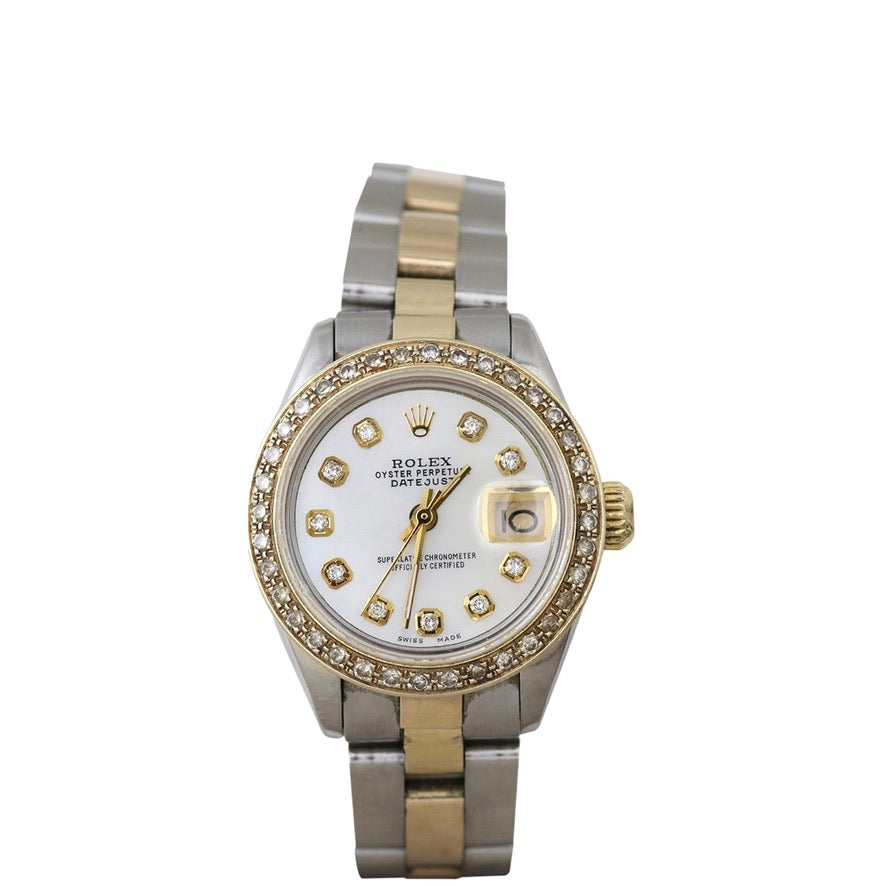

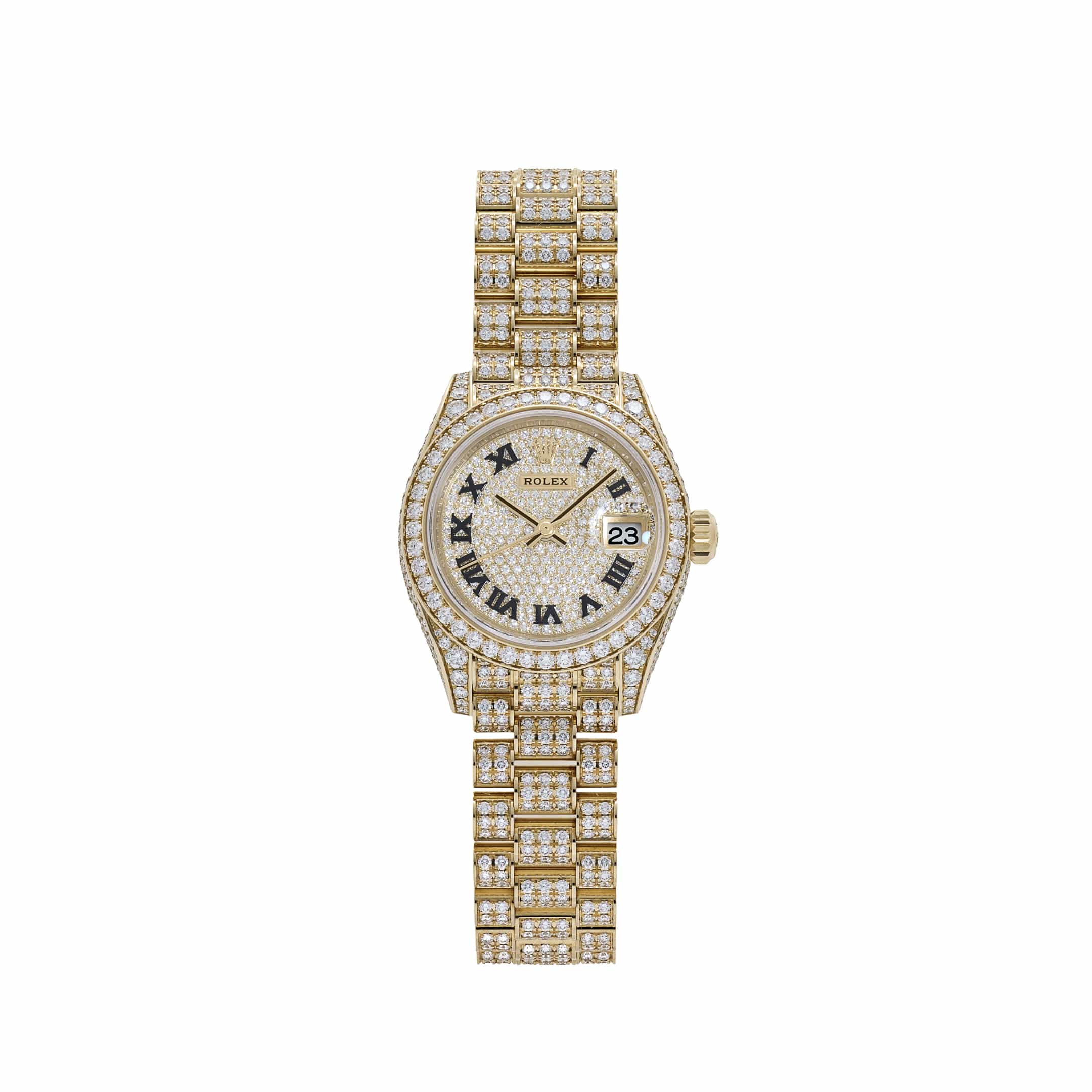
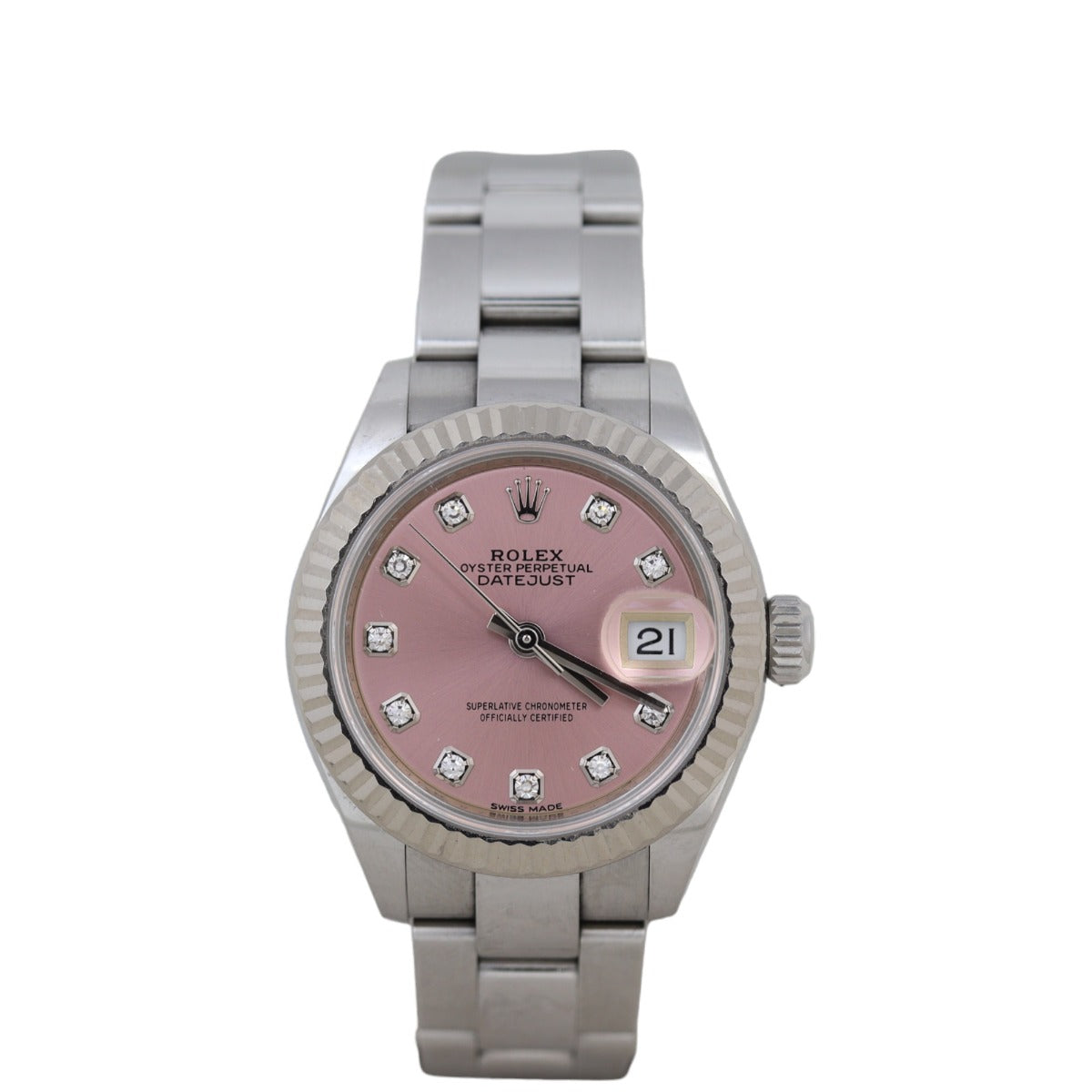
A diamond Rolex Datejust adds diamonds to the dial, the bezel, or both. Diamond hour markers are the most common, with fully set bezels and pavé dials mostly found on gold and Lady-Datejust models.
Factory diamonds vs aftermarket
Rolex sets its own diamonds, and factory-set dials carry specific dial codes that should match the watch’s papers. Aftermarket diamonds are added later by third parties and generally reduce a watch’s value. Ask us for the dial code on any listing.
Popular diamond Datejust styles
• Mother-of-pearl dial with diamond hour markers
• Slate or champagne dial with ten diamond markers
• Diamond-set bezel on an 18ct gold Lady-Datejust
How to choose a diamond Datejust
Decide where you want diamonds: hour markers are the most subtle, while set bezels and pavé dials are the most striking. Ask for the dial code if you want to confirm a factory dial, and compare condition notes on the bezel settings.
Frequently asked questions
Do aftermarket diamonds reduce a Rolex’s value?
Generally yes. Factory-set diamonds are preferred by most buyers and match the watch’s original specification.
Which Datejust sizes come with diamonds?
Diamond options exist across all sizes, but they are most common on the Lady-Datejust and Datejust 31.
Rolex Datejust buying guides
• Pre-owned Datejust buying checklist
• Two-tone vs steel vs gold Datejust
• Rolex Datejust size guide
• Rolex Datejust prices in Australia
• Complete Rolex Datejust guide
Swiss Rolex Datejust is an independent pre-owned watch dealer and is not affiliated with or endorsed by Rolex SA. Rolex, Datejust and Oyster Perpetual are trademarks of Rolex SA.
