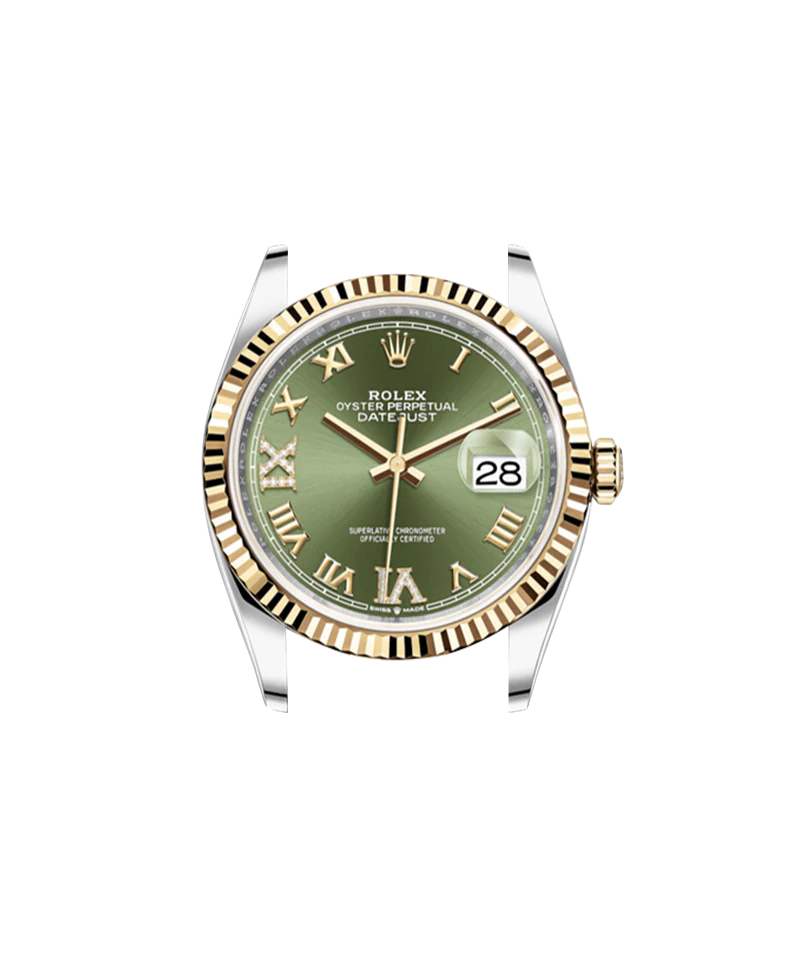
The Rolex Day-Date and Datejust look alike, but they differ in three ways. The Day-Date shows the day of the week spelled out in a window at 12 o’clock as well as the date. It is made only in precious metals, 18ct gold or platinum. It is usually worn on the President bracelet. The Datejust shows only the date and is made in steel, two-tone Rolesor and gold, which makes it far more accessible. If you want the most versatile everyday Rolex, choose the Datejust; if you want Rolex’s ultimate precious-metal statement, choose the Day-Date.
Day-Date vs Datejust at a glance
| Datejust | Day-Date | |
|---|---|---|
| Launched | 1945 | 1956 |
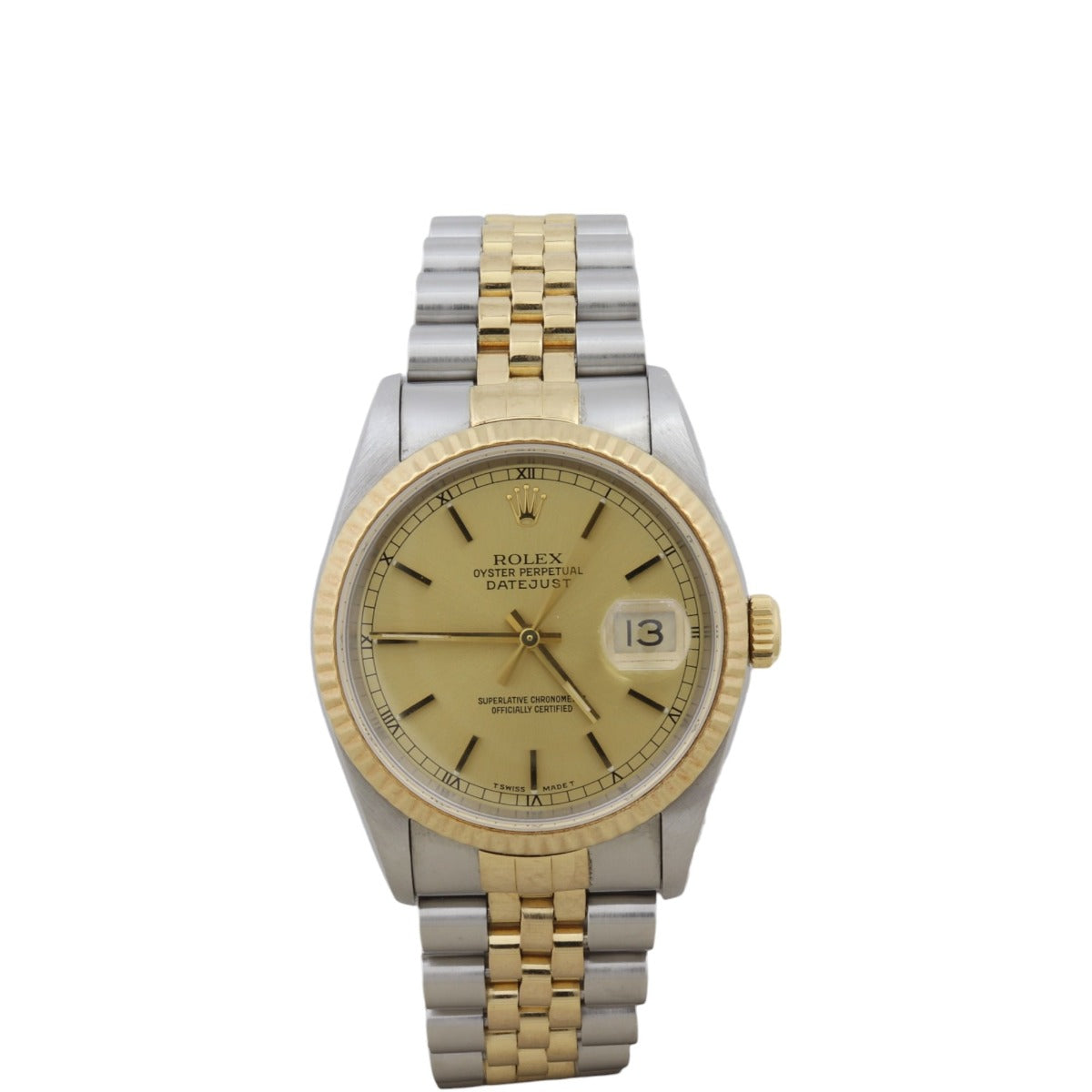
| Displays | Date at 3 o’clock | Day spelled out at 12 o’clock, date at 3 o’clock |
| Metals | Steel, Rolesor (steel and gold), 18ct gold | 18ct gold or platinum only |
| Signature bracelet | Jubilee or Oyster | President |
| Current sizes | 28, 31, 36 and 41mm | 36 and 40mm |
| Price position | Wide range, from entry-level pre-owned steel | Higher, because every case is precious metal |
A short history of both watches
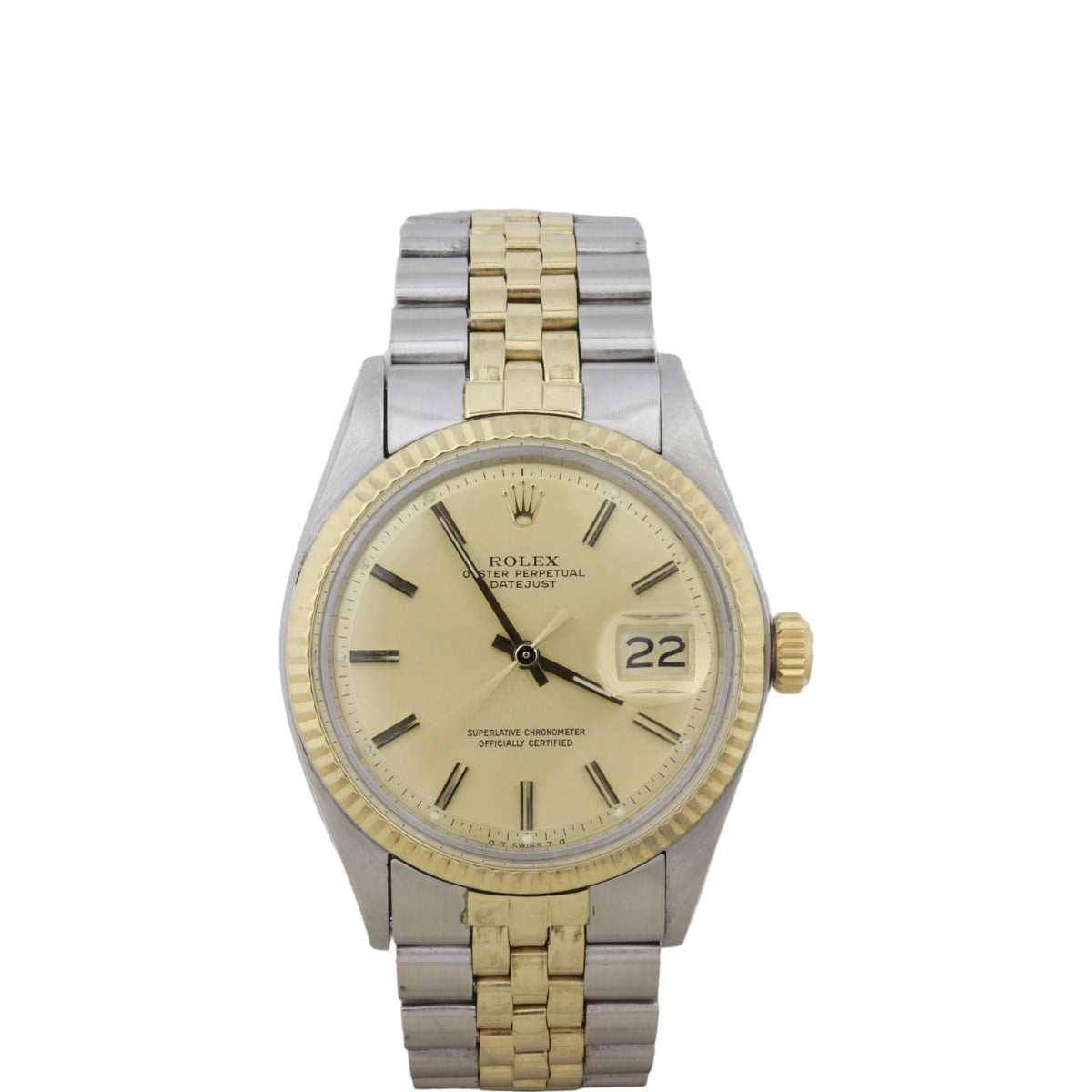
Rolex launched the Datejust in 1945 to mark its 40th anniversary. It was the first self-winding, water-resistant chronometer wristwatch to show the date in a window on the dial, and the Jubilee bracelet was created for it. The Cyclops magnifying lens over the date arrived in the 1950s and has defined the Datejust ever since. Vintage references such as the Datejust 1601 are still popular today.
The Day-Date followed in 1956 as the first wristwatch to display both the date and the day of the week spelled out in full. It was launched with the President bracelet, and its association with world leaders gave it the nickname “the President”. To understand what the name “Oyster Perpetual” means on both dials, read our guide to the Rolex Oyster Perpetual Datejust.
Metals and bracelets: the biggest practical difference

Because the Day-Date is only made in 18ct gold or platinum, every example is a precious-metal watch. That gives it more weight on the wrist and a much higher starting price. The Datejust gives you a choice: Oystersteel for an understated everyday watch, two-tone Rolesor for the classic steel-and-gold look, or full 18ct gold if you want the Day-Date’s richness in a Datejust.
Bracelets follow the same pattern. The Day-Date’s semi-circular three-piece President links are reserved for precious-metal Rolex models. The Datejust is most often seen on the five-piece Jubilee or the sportier three-piece Oyster bracelet. See our metal comparison guide for how each option wears and ages.
Sizes and how they wear
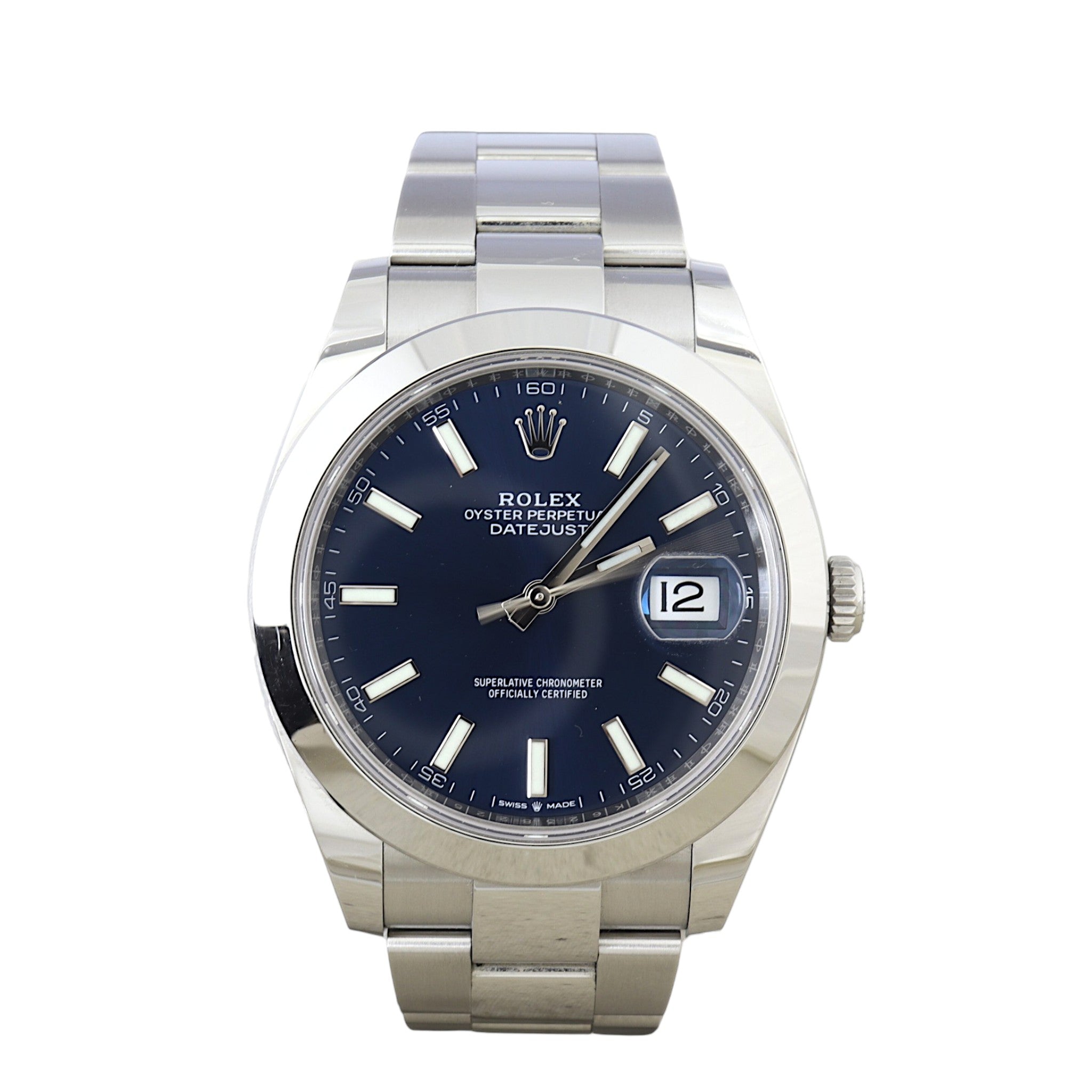
The Day-Date is offered in 36mm and 40mm. The Datejust covers more wrists, from the 28mm Lady-Datejust through the 31mm and 36mm to the 41mm. A 36mm Datejust and a 36mm Day-Date wear similarly, but the gold Day-Date feels noticeably heavier. If you are between sizes, our Rolex Datejust size guide explains which case suits which wrist.
Movements and accuracy
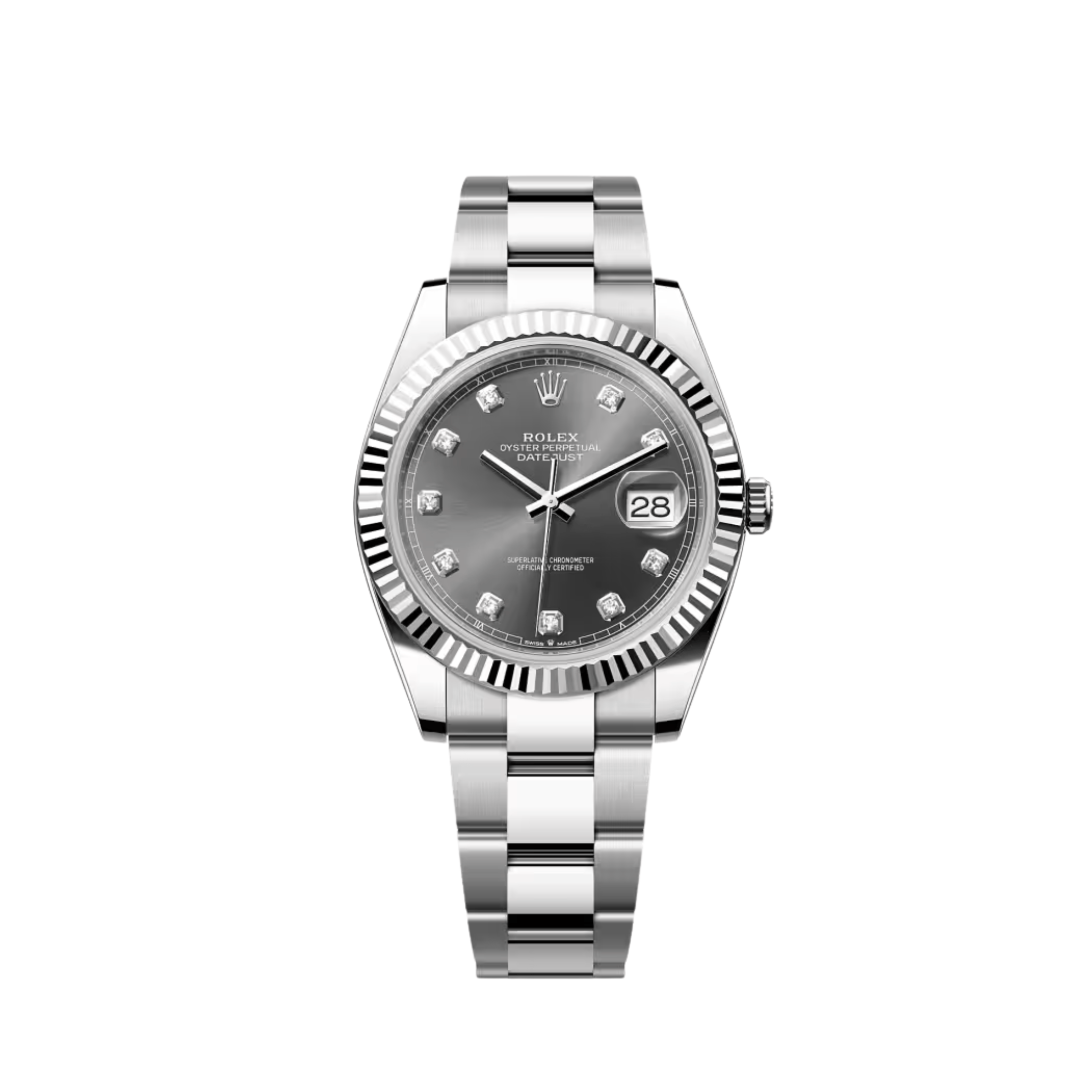
Modern versions of both watches use Rolex’s latest generation of movements with a power reserve of around 70 hours, and both carry the Superlative Chronometer certification of −2/+2 seconds a day after casing. The Day-Date’s movement has the extra mechanism to change the day display. For what that certification actually tests, read what Superlative Chronometer means.
Price and value in Australia
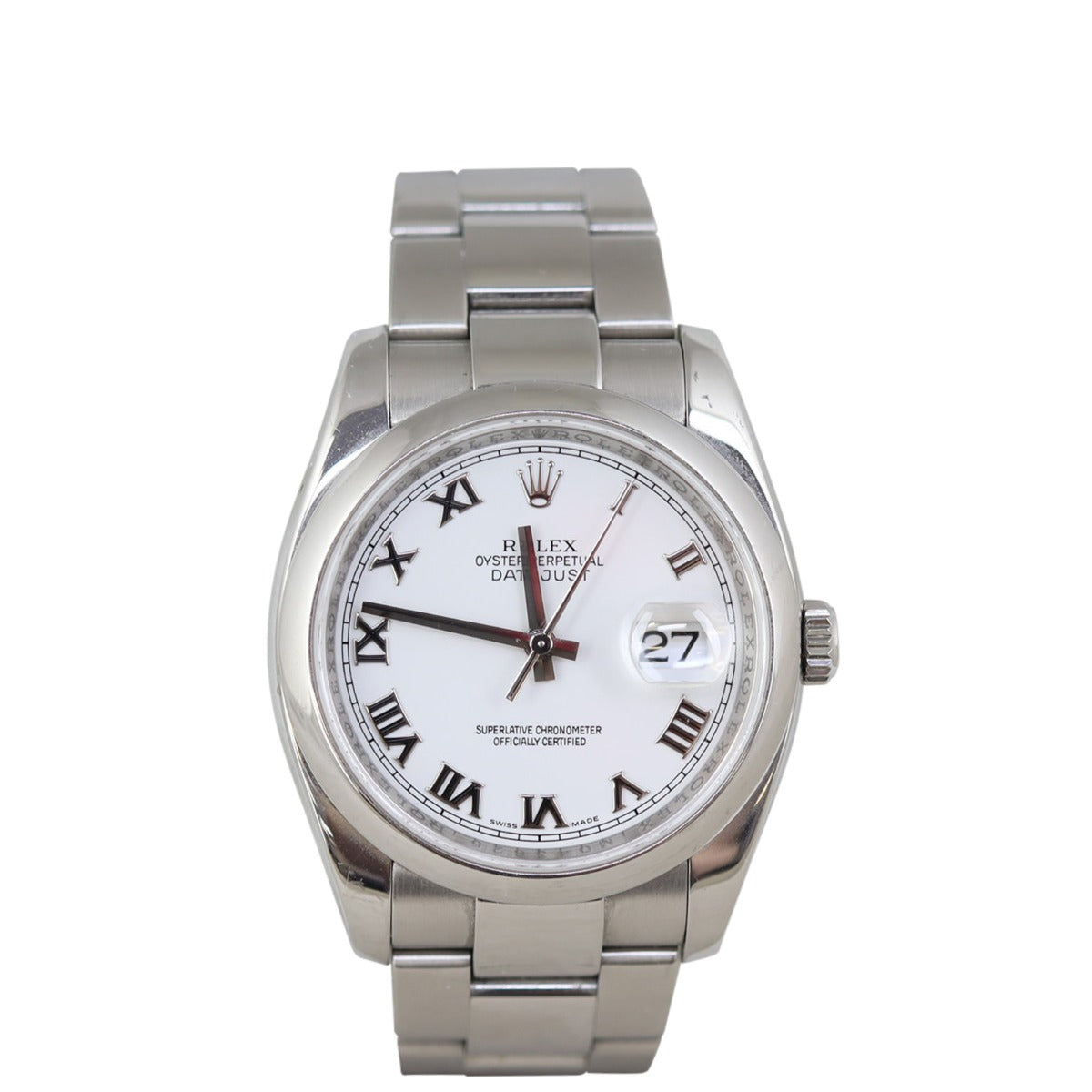
Because every Day-Date is gold or platinum, even pre-owned examples generally cost several times more than a steel or two-tone Datejust. The Datejust’s range is far wider. In our current pre-owned stock, a Lady-Datejust starts from a few thousand dollars, steel and two-tone Datejust 36 models sit mostly in the mid four- to low five-figures, and diamond-set gold pieces go well beyond that. For current figures by size and metal, see how much a Rolex Datejust costs in Australia.
Which should you buy?
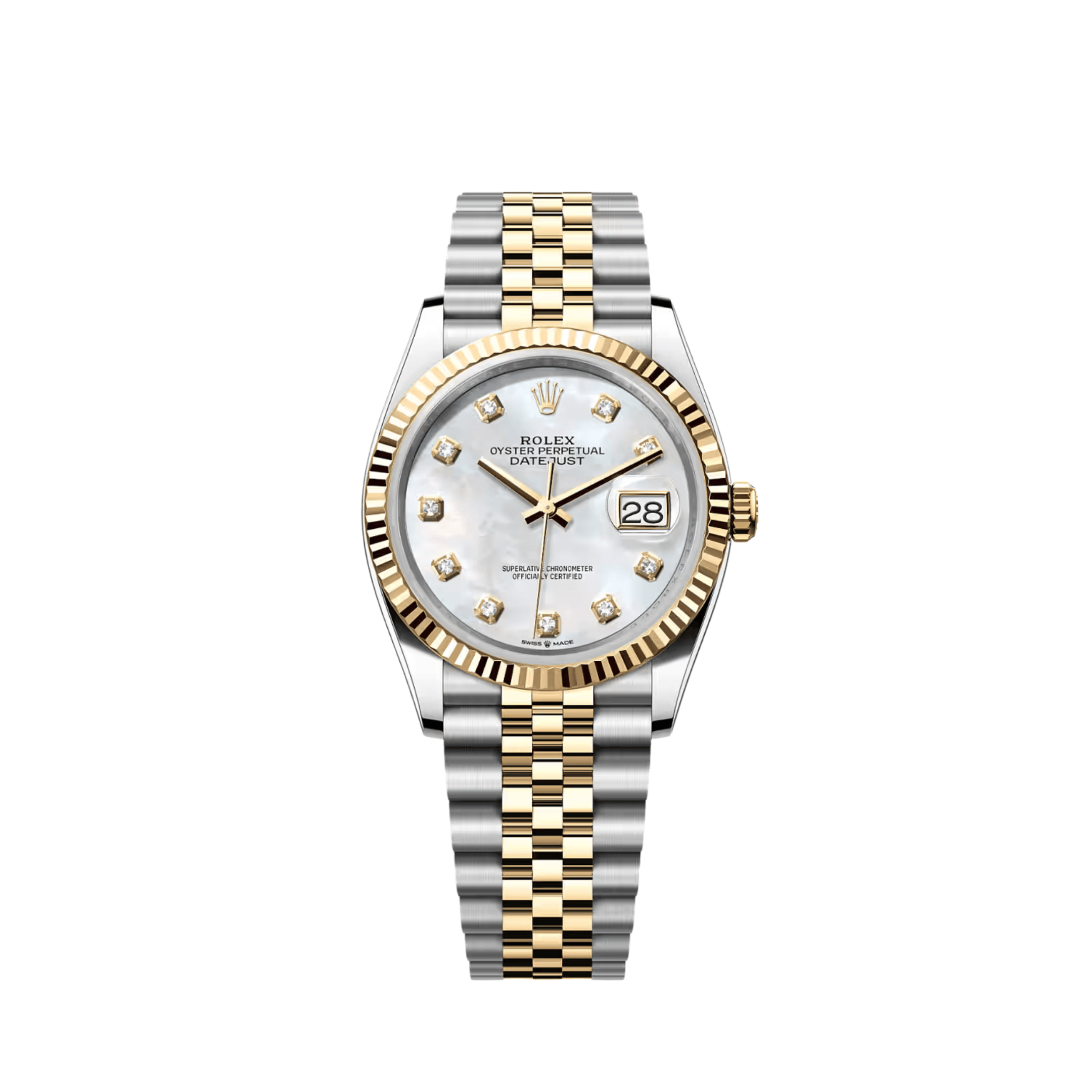
Choose the Datejust if you want one Rolex to wear every day, prefer steel or two-tone, want the widest choice of sizes and dials, or have a budget under the price of a precious-metal watch.
Choose the Day-Date if you specifically want a solid gold or platinum watch, love the day-of-the-week display and the President bracelet, and are buying it as a statement or milestone piece.
Many buyers who want the Day-Date look on a smaller budget choose a gold Datejust or a two-tone Datejust with a fluted gold bezel.
Frequently asked questions
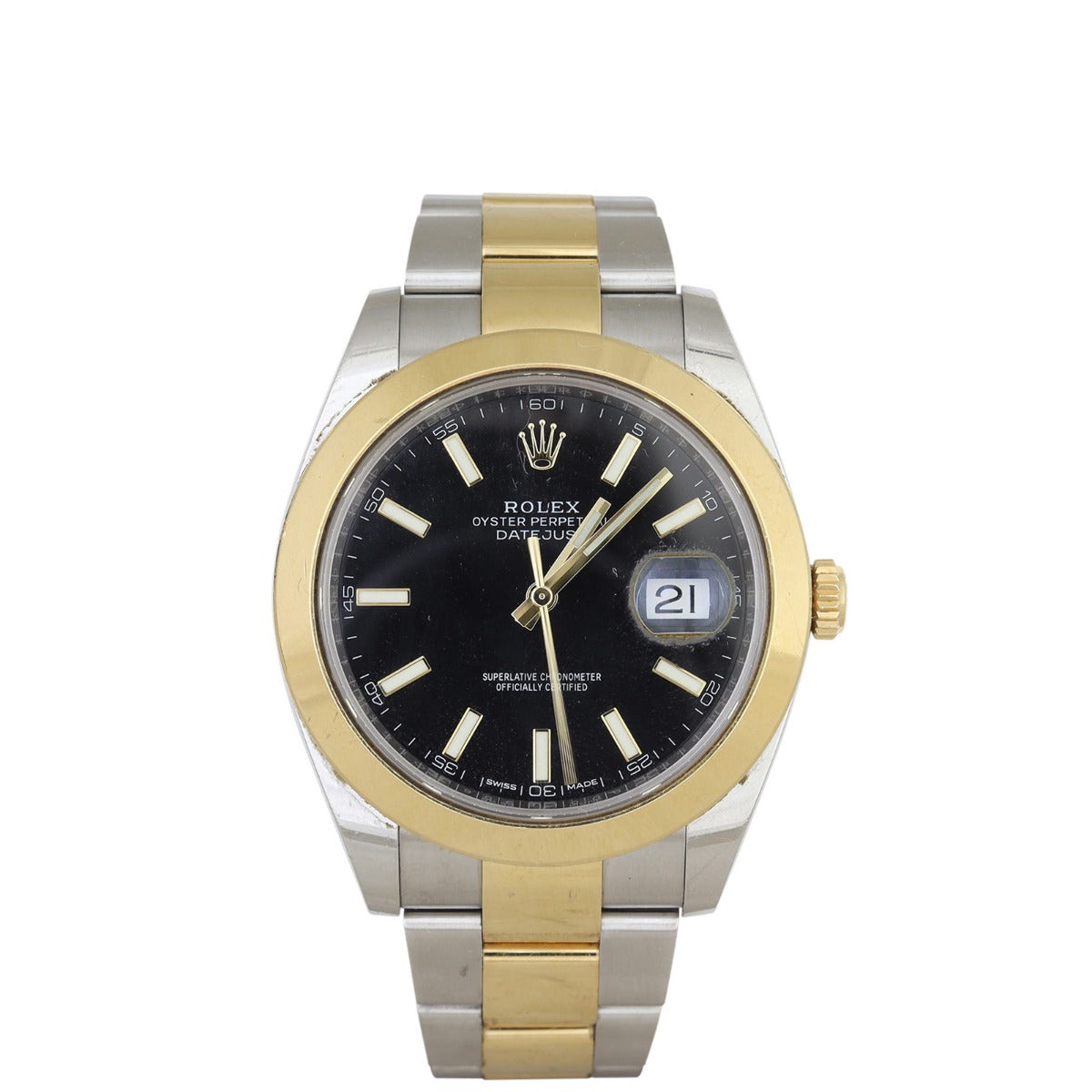
Is the Day-Date a type of Datejust?
No. They are separate Rolex model families. They share the Oyster case, the fluted bezel option and the Cyclops date, but the Day-Date adds a day-of-the-week display and is made only in precious metals.
Why is the Rolex Day-Date called the President?
The Day-Date was launched with the President bracelet, and the watch became associated with heads of state and leaders, so collectors use “President” as its nickname.
Is there a steel Rolex Day-Date?
No. Rolex makes the Day-Date only in 18ct gold or platinum. If you want a steel watch with a similar look, the Datejust is the closest Rolex alternative.
Which is better for everyday wear?
For most people the Datejust, because steel and two-tone models are lighter, more understated and available in more sizes. A gold Day-Date can be worn daily but is heavier and more conspicuous.
Shop pre-owned Rolex Datejust watches
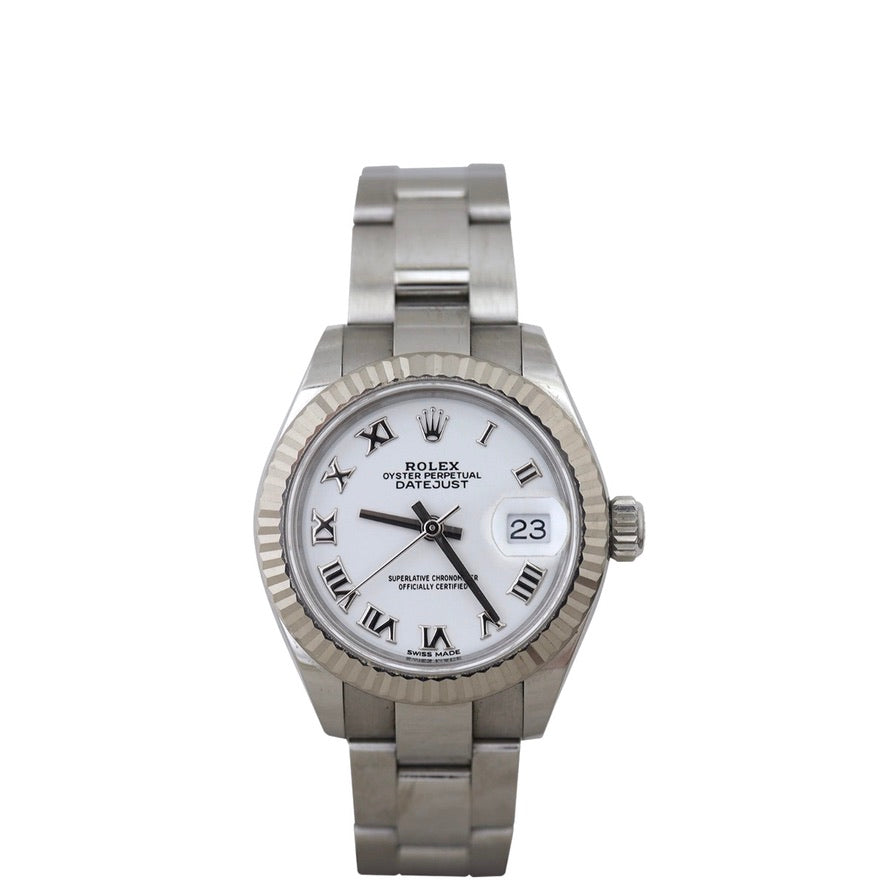
Browse our current stock by size, Datejust 41, Datejust 36, Datejust 31 and Lady-Datejust, or by style: two-tone, gold and diamond. New to the model? Start with our complete Rolex Datejust guide.
Comparing prices before you buy is always worthwhile. Alongside our own stock, you can browse Bob’s Watches to see how similar Rolex watches are priced across the Australian market.
Swiss Rolex Datejust is an independent pre-owned watch dealer and is not affiliated with or endorsed by Rolex SA. Rolex, Datejust, Day-Date, Oyster Perpetual and Rolesor are trademarks of Rolex SA.
